hoosing the right laser starts with understanding 1064nm 532nm dual wavelength laser specs. Matching the wavelength to the patient’s skin type and treatment goal improves safety and results. Devices like EO’s HS-290B give clinics flexibility for each treatment.
| Application | Market Size (2023) | Market Size (2033) | CAGR (%) |
|---|---|---|---|
| Total Market Size | USD 2.76 Billion | USD 5.02 Billion | 6.16% |
1064nm 532nm dual wavelength laser specs comparison
Key features and differences
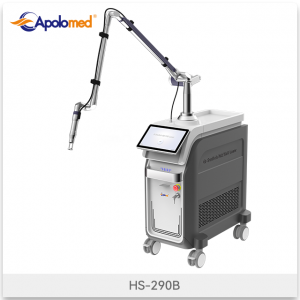
Understanding 1064nm 532nm dual wavelength laser specs helps clinics make the right choice for each patient. These lasers use different wavelengths to target specific skin concerns. The EO Q-Switch ND YAG Laser HS-290B is a leading example of a dual wavelength device, offering both 1064nm and 532nm options for flexible treatment.
Below is a side-by-side table comparing the main technical and clinical features of each wavelength:
| Characteristic | 532nm Wavelength | 1064nm Wavelength |
|---|---|---|
| Penetration Depth | Superficial (epidermis to papillary dermis) | Deep (mid to deep dermis) |
| Primary Chromophore | Melanin, oxyhemoglobin | Water, collagen, melanin |
| Skin Type Compatibility | Types I-III (caution IV-VI) | All types I-VI |
| Complication Risk | Higher in dark skin | Lower overall |
| Best for | Colored tattoos, superficial lesions | Black tattoos, deep lesions, dark skin |
The 532nm wavelength targets melanin and oxyhemoglobin in the upper layers of the skin. This makes it ideal for treating superficial pigment and vascular lesions. The 1064nm wavelength penetrates deeper, reaching the mid to deep dermis. It is absorbed by melanin and water, making it safer for darker skin and more effective for deep lesions.
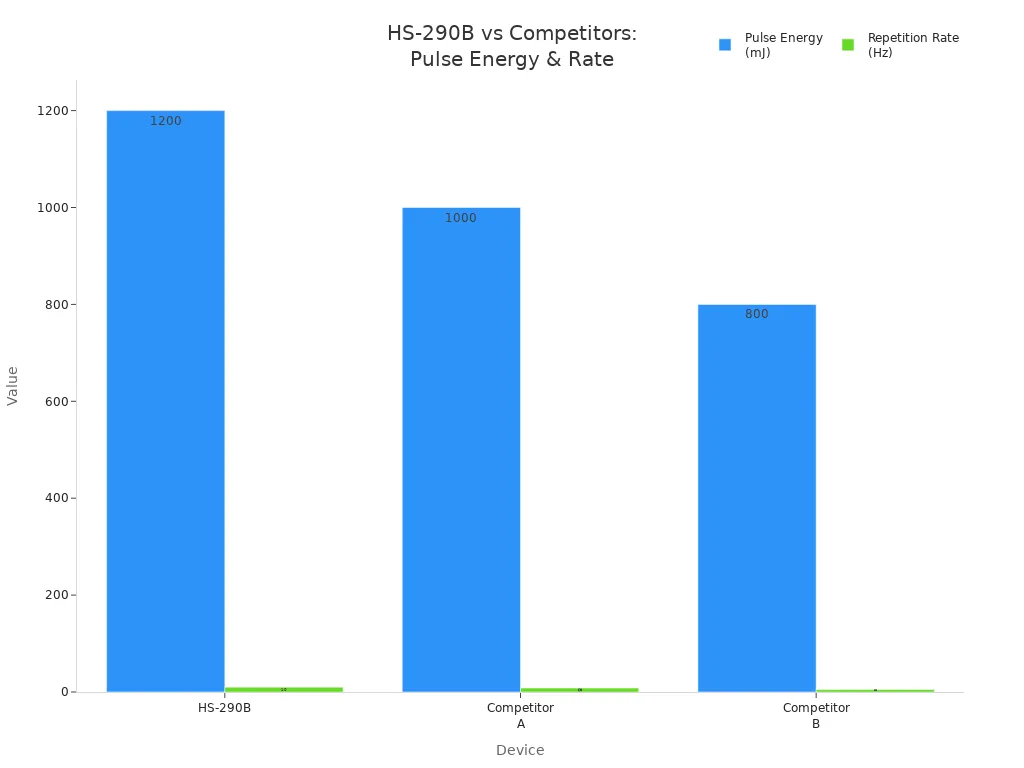
The EO Q-Switch ND YAG Laser HS-290B stands out among dual wavelength devices. It offers high pulse energy (up to 1200mJ at 1064nm), a fast repetition rate (up to 10Hz), and advanced cooling for patient comfort. Compared to other devices, the HS-290B provides more power and flexibility for a wide range of treatment needs.
| Specification | HS-290B | Competitor A | Competitor B |
|---|---|---|---|
| Wavelength | 1064/532, 585/650nm (optional) | 1064/532 | 1064/532, 650nm |
| Pulse Energy | Max. 1200mJ (1064nm) | Max. 1000mJ | Max. 800mJ |
| Repetition Rate | Max. 10Hz | Max. 8Hz | Max. 5Hz |
| Cooling System | Advanced air & water | Air cooling | Water cooling |
Tip: The advanced cooling system in the HS-290B helps reduce discomfort during nd:yag laser treatment, making it suitable for longer sessions and sensitive patients.
Best uses for each wavelength
The 1064nm 532nm dual wavelength laser specs guide practitioners in choosing the right wavelength for each treatment. Each wavelength has unique strengths for different skin concerns.
532nm Wavelength:
·Best for colored tattoos (red, orange, yellow, purple)
·Effective for superficial pigmented lesions like freckles and solar lentigines
·Useful for facial vascular lesions such as telangiectasia
·Works well on lighter skin types (Fitzpatrick I-III)
·Clinical studies show high absorption by superficial chromophores, but there is a higher risk of post-inflammatory hyperpigmentation in darker skin
1064nm Wavelength:
·Best for black and dark blue tattoos
·Effective for deeper pigmented lesions, such as nevus of Ota
·Preferred for vascular lesions in deeper skin layers
·Safe for all skin types, including darker and tanned skin (Fitzpatrick IV-VI)
·Clinical evidence shows high clearance rates for black tattoos and deep lesions, with fewer adverse events and less pain
The EO Q-Switch ND YAG Laser HS-290B allows clinics to switch between these wavelengths easily. This flexibility means practitioners can match the 1064nm 532nm dual wavelength laser specs to each patient’s needs, improving safety and results.
·532nm is ideal for superficial treatments and colored tattoos, but requires careful patient selection, especially for darker skin.
·1064nm is the go-to choice for deep lesions, black tattoos, and safe use on all skin types.
Note: Both wavelengths can be used for skin rejuvenation, but the choice depends on the depth and type of lesion being treated.
The right nd:yag laser treatment depends on matching the wavelength to the patient’s skin type, lesion depth, and treatment goal. The 1064nm 532nm dual wavelength laser specs make the EO HS-290B a versatile tool for clinics that want to offer safe, effective solutions for a wide range of skin concerns.
Decision factors for laser selection
Skin type and Fitzpatrick scale
Laser selection begins with understanding the patient’s skin type. The Fitzpatrick scale classifies skin into six types, ranging from very fair (Type I) to very dark (Type VI). This scale helps clinics choose the safest and most effective wavelength for each treatment. The 1064nm wavelength suits all skin types, including darker tones. It penetrates deeper and reduces the risk of post-inflammatory hyperpigmentation. The 532nm wavelength works best for lighter skin types. It targets superficial lesions but requires caution for darker skin due to higher melanin content.
| Wavelength | Effectiveness | Skin Type Consideration |
|---|---|---|
| 1064 nm | Treats deeper lesions and severe photo-damaged skin | Suitable for all Fitzpatrick skin types |
| 532 nm | Effective for specific conditions | Varies in risk of PIH depending on skin type |
Clinics should always assess the Fitzpatrick scale before starting any treatment. Patients with darker skin need extra care. Practitioners may perform test spots and use depigmenting agents to minimize complications.
Treatment depth and lesion type
The depth of the lesion determines which wavelength to use. Superficial lesions, such as freckles and age spots, respond well to the 532nm wavelength. This wavelength targets the upper layers of the skin. Deeper lesions, including chronic pigmentation and vascular issues, require the 1064nm wavelength. It reaches the mid-to-deep dermis and offers greater clinical efficacy for these conditions.
| Laser Type | Wavelength | Application |
|---|---|---|
| 532 nm | 532 nm | Superficial lesions |
| 1064 nm | 1064 nm | Mid-to-deep dermis lesions |
Clinics must match the wavelength to the lesion depth for optimal treatment results. The EO HS-290B device allows practitioners to switch between wavelengths, ensuring precise targeting and improved clinical efficacy.
Vascular vs pigment targets
Lasers treat both vascular and pigment lesions. The 532nm wavelength absorbs strongly in melanin and oxyhemoglobin. It works well for superficial pigmented lesions and facial vascular issues. The 1064nm wavelength has lower absorption in melanin but penetrates deeper. It is safer for darker skin and treats deep pigmented lesions and vascular conditions.
| Wavelength | Target Lesions | Absorption Characteristics | Penetration Depth |
|---|---|---|---|
| 532nm | Superficial Pigmented Lesions, Vascular Lesions | High absorption in melanin and oxyhemoglobin | Shallow, targets papillary dermis and epidermis |
| 1064nm | Vascular Lesions, Deep Pigmented Lesions | Lower absorption in melanin, safer for darker skin types | Deeper penetration, suitable for mixed melasma treatment |
Clinics often use both wavelengths for the treatment of tattoos. The 532nm wavelength removes colored tattoos, while the 1064nm wavelength clears black and blue tattoos. This dual approach increases safety and efficacy for patients with different skin types and tattoo colors.
Patient safety and comfort
Patient safety and comfort are top priorities in laser treatments. Practitioners must review the patient’s full skin history, including reactions to heat, sun, or topical products. Test spots help monitor skin response before full treatment. Clinics should select board-certified dermatologists with experience in treating skin of color.
·The 532nm wavelength requires careful patient selection based on Fitzpatrick skin type.
·Darker skin types (IV-VI) need extra caution due to higher melanin content.
·Pre-treatment with depigmenting agents may reduce complications.
·For patients with skin of color, the risk of post-inflammatory hyperpigmentation is higher.
·Test spots and expert consultation are essential for safe outcomes.
Both 1064nm and 532nm wavelengths are effective for skin rejuvenation. The 532nm wavelength clears superficial pigmentation quickly. The 1064nm wavelength penetrates deeper and remodels collagen, making it versatile for chronic pigmentation disorders. Clinics can achieve high safety and efficacy by matching the wavelength to the patient’s skin type and treatment goals.
Tip: Always prioritize patient comfort by using advanced cooling systems and monitoring skin response during treatment.
When to choose 1064nm
Deep lesions and dark skin
The 1064nm wavelength is a top choice for treating deep skin lesions and for patients with darker skin. This laser can reach the mid to deep dermis, making it effective for stubborn pigmentation. It targets melanosomes in skin cells, which helps with conditions like melasma. The 1064nm Q-switched Nd:YAG laser is also safer for Fitzpatrick skin types III to VI. It lowers the risk of post-inflammatory hyperpigmentation. The EO HS-290B uses a flat-top beam and large spot size, which means energy spreads evenly and penetrates deeper. This feature is important for tattoo removal on dark skin and for deep pigment removal.
Common indications
The 1064nm laser excels in several medical scenarios. Here are the most common uses:
·Black and dark blue tattoo removal
·Hair removal, especially for darker or tanned skin
·Deep pigmented lesion removal, such as nevus of Ota and melasma
·Vascular lesion removal in deeper layers
·Acne treatment and skin rejuvenation
Studies show that six sessions of 1064nm laser hair removal are safe and effective. Patients see better results with each session. Tattoo removal for black ink is highly successful with this wavelength. The EO HS-290B provides high pulse energy and advanced cooling, which improves patient comfort during removal procedures.
Limitations
While the 1064nm laser is versatile, some patients are not suitable for treatment. The table below lists common limitations:
| Limitation/Contraindication | Description |
|---|---|
| Pregnant women | Not eligible for treatment |
| Subungual hematoma | May complicate removal procedures |
| Photosensitizing drug users | Risk of adverse reactions during removal |
| Psoriasis, lichen planus | May interfere with removal outcomes |
| Atopic dermatitis (nail area) | Not suitable if nails are involved |
Note: Always review patient history before starting tattoo removal or other removal treatments with 1064nm lasers.
When to choose 532nm
Superficial lesions and light skin
The 532nm wavelength is ideal for treating superficial skin concerns. Clinics often select this laser for patients with lighter skin types. The energy from the 532nm laser is absorbed by superficial chromophores, such as melanin and hemoglobin. This makes it effective for targeting epidermal pigmented lesions and vascular conditions near the skin surface. The risk of post-inflammatory hyperpigmentation increases in darker skin, so practitioners use caution and careful patient selection.
·The 532nm laser works best for light skin types (Fitzpatrick I-III).
·It targets superficial pigment and vascular lesions with high precision.
·The wavelength is absorbed strongly by melanin, making it suitable for epidermal pigmentation disorders.
·Hemoglobin absorption allows for effective vascular lesion removal with minimal thermal damage.
·Clinics use test spots to monitor skin response before full treatment.
Common indications
The 532nm laser is preferred for several medical scenarios. It is especially useful for tattoo removal involving colored pigments and for removal of superficial lesions. The following table highlights common indications and reported outcomes:
| Medical Indications | Reported Outcomes |
|---|---|
| Superficial pigmented lesions | Effective treatment with higher risk of post-inflammatory hyperpigmentation in darker skin types |
| Superficial vascular lesions | Fewer adverse events compared to pigmented lesions, better overall tolerance |
| Specific tattoo pigments (red, orange, yellow) | Enhanced clearance with minimal collateral damage |
Clinics rely on the 532nm laser for tattoo removal of red, orange, yellow, and purple pigments. The wavelength’s selectivity for melanin and hemoglobin ensures precise removal of superficial pigment and vascular lesions. Tattoo removal sessions using 532nm often result in minimal collateral damage and improved patient satisfaction.
·Tattoo removal of colored pigments is highly effective.
·Removal of freckles, lentigines, and facial vascular lesions shows good outcomes.
·The laser offers enhanced clearance for specific tattoo pigments.
Limitations
The 532nm wavelength has limitations. It poses a higher risk of post-inflammatory hyperpigmentation in darker skin types. Practitioners avoid using this laser for tattoo removal or removal of superficial lesions in patients with Fitzpatrick IV-VI skin. Clinics must assess patient history and skin type before treatment.
Note: Always perform test spots and monitor for adverse reactions during tattoo removal or removal procedures with 532nm lasers.
Dual wavelength use in practice
When to combine 1064nm and 532nm
Clinics sometimes use both 1064nm and 532nm wavelengths in a single session. This approach helps when treating complex skin conditions. For example, melasma often responds better when both wavelengths are used. The 1064nm nanosecond laser can reach deeper pigment, while the 532nm nanosecond laser targets surface pigment. Onychomycosis, a nail fungus, also benefits from dual wavelength use. Each nanosecond laser wavelength attacks different parts of the fungus. This method can improve results and reduce relapse rates.
| Study Focus | Findings |
|---|---|
| Melasma Treatment | Combining 1064nm nanosecond laser with low fluence and microsecond pulse modes enhances treatment efficacy and reduces relapse rates. |
| Onychomycosis Treatment | Dual nanosecond laser wavelengths target different components of the fungal cell wall, improving treatment outcomes. |
Advantages and limitations
Dual wavelength nanosecond laser systems offer several advantages. They improve safety for patients with darker skin by balancing epidermal protection and follicular heating. Clinics can treat a wider range of conditions, including photoaging, with one device. However, dual wavelength nanosecond laser use may not always increase effectiveness for every indication. Some patients may experience moderate pain or longer recovery. Hair reduction with dual nanosecond laser can be less effective than with a single wavelength. Practitioners should always monitor for side effects like prolonged sweating.
Note: Dual wavelength nanosecond laser use is valuable for complex cases, but not every patient needs both wavelengths in one session.
Device selection tips
Choosing the right dual wavelength nanosecond laser device is important for clinics. Look for these features:
·Wavelength switching for flexible treatments
·Safety for darker skin tones, especially with Nd:YAG nanosecond laser
·High treatment efficiency for busy clinics
·Versatility for different hair and skin types
Modern nanosecond laser systems combine multiple wavelengths in one device. Adjustable settings allow personalized treatments for photoaging, pigment, and hair removal. Smart sensors help keep each session safe and effective. The EO Q-Switch ND YAG Laser HS-290B offers these features, making it a strong choice for clinics with diverse patient needs.
Practical checklist for clinics
Assessing clinic needs
Choosing the right dual wavelength laser starts with a careful review of your clinic’s requirements. Here is a checklist to guide your decision:
1.Identify your main patient groups and the treatments they seek.
2.Review laser specifications to ensure the device can handle a wide range of procedures.
3.Match the laser’s capabilities to different skin types for both safety and effectiveness.
4.Compare the quality and price of available devices.
5.Check the manufacturer’s reputation for service and support.
6.Confirm that local repair and maintenance options are available.
Tip: A versatile device like the EO Q-Switch ND YAG Laser HS-290B can help clinics serve a broader range of patients and treatment needs.
Patient demographics
Patient demographics play a key role in laser selection. Skin type and pigmentation depth often determine which wavelength is most effective. The 532nm wavelength works best for superficial pigmentation in lighter skin types. The 1064nm wavelength is safer and more effective for all skin types, especially those with darker pigmentation. Understanding your patient mix helps you tailor treatments and achieve better results.
Device features and brand choice
When investing in a dual wavelength laser, focus on features that improve safety, efficiency, and user experience.
| Feature | Description |
|---|---|
| Dual Wavelength | Enables precise treatment for all skin types and a variety of conditions. |
| Speed of Treatment | Allows for quick sessions, increasing clinic productivity. |
| Integrated Cooling | Enhances patient comfort during procedures. |
| User-Friendly Design | Simplifies operation and reduces fatigue for practitioners. |
Choosing the right laser improves safety and results. Matching wavelength to patient and clinic needs boosts treatment success.
| Aspect | Description |
|---|---|
| Control | Dual wavelength systems simplify protocols and save time for clinics. |
| Practicality | Combining wavelengths ensures effective energy levels for each treatment. |
Dual wavelength devices like EO HS-290B offer flexibility for confident, informed choices.
FAQ
What is the difference between picosecond and nanosecond lasers?
Picosecond lasers deliver energy in shorter bursts than nanosecond lasers. Picosecond pulses last one trillionth of a second. Nanosecond pulses last one billionth of a second.
Which laser is better for tattoo removal, picosecond or nanosecond?
Picosecond lasers break ink into smaller particles than nanosecond lasers. Picosecond lasers often clear tattoos faster. Nanosecond lasers still work well for many tattoo colors.
Can picosecond and nanosecond lasers treat all skin types?
Picosecond and nanosecond lasers can treat most skin types. Picosecond lasers cause less heat damage. Nanosecond lasers are safe for darker skin when used by trained professionals.
Post time: Jul-02-2026


