Q-switch lasers lead the global market in laser tattoo removal, holding a projected 68% share by 2026. Experts select the best devices by considering precision, ink effectiveness, and recovery time:
| Criteria | Description |
|---|---|
| Precision | Targets ink while protecting skin |
| Effectiveness | Excels on difficult colors |
| Recovery | Allows quick return to daily activities |
Choosing a reputable q switched laser manufacturer, such as apolomed or portable-q-switched-laser, ensures reliable results, advanced features, and excellent user experience.
Top Q-Switched Lasers for Tattoo Removal
Leading Devices Overview
Many dermatologists recommend several q-switched lasers for tattoo removal. These devices have earned trust for their effectiveness and safety. The most frequently recommended options include:
1.Q-switched ruby laser (QSRL) – This device uses a 694 nm wavelength and a pulse duration of 28-40 nanoseconds. It works well for removing dark blue and black ink.
2.Q-switched alexandrite laser (QSAL) – This laser operates at a 755 nm wavelength with a pulse duration of 50-100 nanoseconds. It targets green and black pigments.
3.Q-switched neodymium-doped yttrium aluminum garnet (QS Nd:YAG) laser – This device uses a 1,064 nm wavelength and a pulse duration of 5-10 nanoseconds. It is effective for a wide range of ink colors and skin types.
The QX-MAX also stands out as a reliable choice for laser tattoo removal. Many professionals call it a workhorse because it delivers consistent results.
Q-switched lasers fire in nanoseconds. This short pulse duration reduces heat transfer to the skin. As a result, these devices minimize the risk of complications and improve patient comfort. Picosecond lasers fire even faster, but studies show that q-switched lasers remain the gold standard for tattoo removal. They offer proven effectiveness and require fewer treatments for most patients.
apolomed and portable-q-switched-laser Highlights
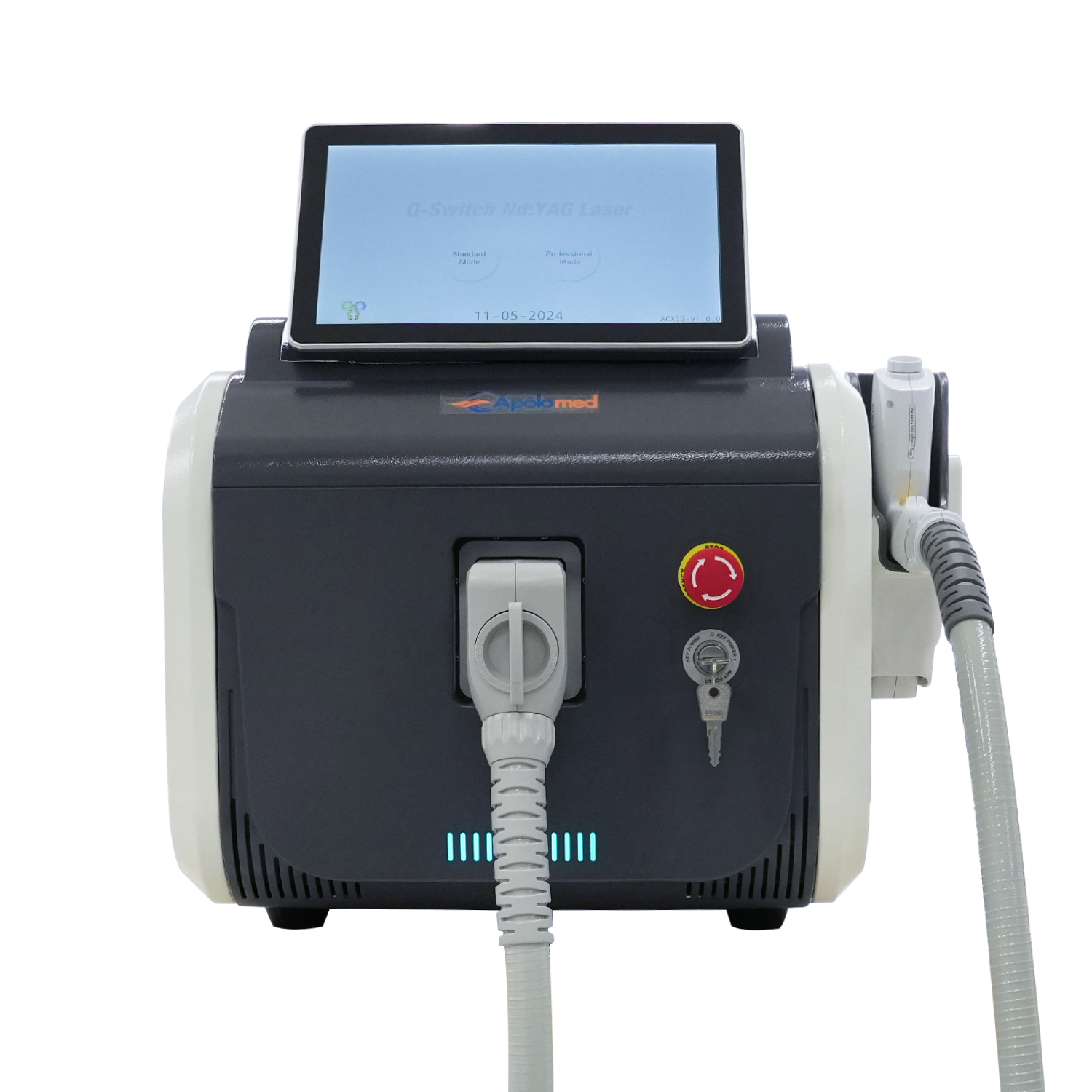
apolomed and portable-q-switched-laser have become standout options among leading devices. They combine advanced technology with user-friendly features. The following table shows what sets them apart:
| Feature | Description |
|---|---|
| Advanced Technology | Uses an ARM-A13 CPU and Android O/S 11 for smooth operation and control. |
| Display and Interface | Offers a 2K HD color touch screen that supports 16 languages. |
| Adjustable Parameters | Allows easy adjustment of treatment settings for precise results. |
| Application Versatility | Treats tattoos, pigmented lesions, vascular lesions, and skin rejuvenation. |
| Modular Design | Features a modular structure for simple maintenance and reliability. |
| Water Circulation | Includes a water filter for clean, effective cooling during treatments. |
apolomed and portable-q-switched-laser provide a modern user interface. The color touch screen makes operation simple. Users can select from 16 languages, which helps clinics serve clients from many backgrounds. The advanced operating system ensures smooth performance and quick adjustments during procedures.
These devices also offer versatility. They treat tattoos, freckles, melasma, vascular lesions, and even help with skin rejuvenation. Their modular design makes maintenance easy, which reduces downtime for clinics. The water circulation system keeps the device cool, improving safety and comfort for patients.
Tip: Clinics looking for reliable, advanced, and easy-to-use q-switched lasers should consider apolomed and portable-q-switched-laser as top choices for tattoo removal and other skin treatments.
Mechanism of Tattoo Removal with Q-Switched Lasers
How Q-Switched Lasers Work
Q-switched lasers use a unique mechanism of tattoo removal that relies on advanced laser-tissue interaction. These devices emit short, high-intensity pulses that create strong photoacoustic waves. The waves break up tattoo pigments into tiny fragments. The body’s immune system then removes these particles over time.
The principle of selective photothermolysis guides this process. Light energy targets tattoo pigments without damaging the surrounding skin. The pulse duration matches the size of the pigment, which allows for precise destruction. Selective photothermolysis ensures that only the ink absorbs the energy, leaving healthy tissue unharmed.
The laser-tissue interaction also produces shock waves. These waves cause the tattoo pigments to explode into smaller pieces. Macrophages, which are special cells in the body, clear away the fragments. This process makes q-switch lasers highly effective for tattoo removal.
A clinical study showed that q-switched Nd:YAG lasers removed tattoos in fewer sessions than expected. Patients needed about five treatments, which was less than the number predicted by standard scales. Long-term results confirmed that the laser-tissue interaction continued to break down tattoo pigments even after the sessions ended.
Benefits for Tattoo and Skin Treatments
Q-switched lasers offer more than just tattoo removal. The same selective photothermolysis and laser-tissue interaction help treat other skin conditions. These devices can target:
·Onychomycosis (nail fungus)
·Melasma (dark patches on the skin)
·Telangiectasias (small blood vessels)
·Photoaging (sun damage)
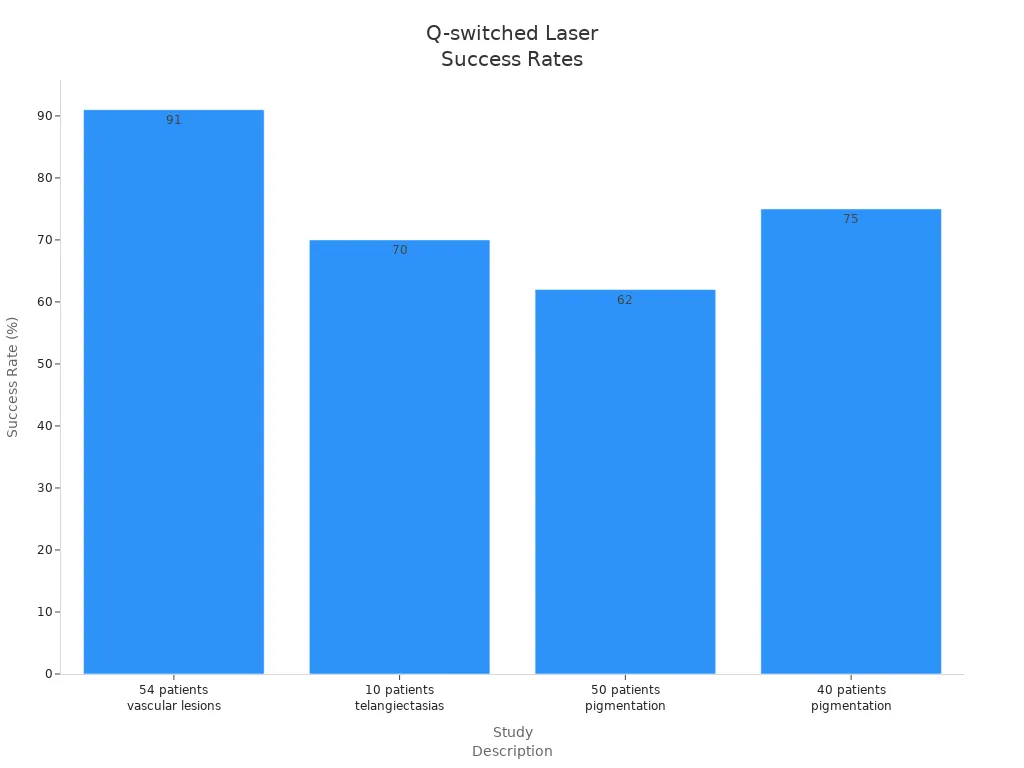
Studies show high success rates for pigmentation and vascular lesions. The table below highlights results from different clinical trials:
| Study Description | Success Rate | Treatment Details |
|---|---|---|
| 54 patients treated with 1064/532 nm Q-switched Nd:YAG laser | 91% improvement in vascular lesions | 2-3 cycles at 6-8 weeks intervals, radiation dose 4.0-12 J/cm² |
| 10 patients with telangiectasias | 70% improvement with higher dose | 1 session using 3.0-4.0 J/cm² vs 1.0-2.0 J/cm² |
| 50 patients treated with 1064 nm Q-switched Nd:YAG laser | 50-74% reduction in pigmentation | 15 weekly sessions at 2.8 J/cm² |
| 40 patients treated with 1064 nm Q-switched Nd:YAG laser | 75% showed excellent/good improvement | 10 weekly sessions at 1.2-2.0 J/cm², evaluated by mMASI and PGA indices |
The combination of selective photothermolysis and precise laser-tissue interaction makes q-switched lasers a top choice for clinics. Devices like apolomed and portable-q-switched-laser use these advanced technologies to deliver safe and effective results for a wide range of skin treatments.
Comparing Effectiveness and Safety
Results Across Devices
Tattoo removal results depend on several factors, including the type of q-switched laser, the color of the tattoo pigments, and the complexity of the design. Devices like the ruby, alexandrite, and Nd:YAG lasers each offer unique advantages for different ink colors. Black and dark blue tattoo pigments respond best to most q-switched lasers, while green, yellow, and bright red pigments often require specialized wavelengths or a combination of devices.
| Q-switched Laser | Wavelength | Pulse Duration | Tattoo Colors |
|---|---|---|---|
| Ruby | 694 nm | < 40 ns | black, blue, green |
| Alexandrite | 755 nm | 50–100 ns | black, blue, green |
| Nd:YAG | 1064 nm | < 10 ns | black, blue |
| KTP | 532 nm | < 10 ns | red, orange, yellow, brown |
Q-switched lasers are especially effective for dark inks. The effectiveness can vary based on the device and the complexity of the tattoo. Picosecond systems sometimes require fewer sessions for resistant colors, but q-switch technology remains the gold standard for most clinics.
The number of sessions needed for complete tattoo removal also varies. Amateur tattoos usually require between 5 and 10 sessions. Professional tattoos may need 15 to 20 sessions, and in rare cases, up to 25 sessions. The removal process works by breaking down tattoo pigments into smaller particles, which the body then clears away over time.
Note: apolomed and portable-q-switched-laser devices allow practitioners to adjust treatment parameters easily. This flexibility helps optimize results for different tattoo pigments and skin types.
Safety Features and Patient Comfort
Safety remains a top priority for every q switched laser manufacturer. Leading devices integrate multiple features to protect both patients and operators. These features include compliance with safety regulations, failsafe interlocks, restricted access, and clear warning signs. Integrated cooling systems play a crucial role in protecting the skin and reducing discomfort during laser tattoo removal.
| Safety Feature | Description |
|---|---|
| Compliance with Safety Regulations | Meets Maximum Permissible Exposure standards for safe laser radiation levels |
| Failsafe Interlocks | Prevents accidental exposure to laser radiation |
| Restricted Access | Limits operation to trained personnel |
| Warning Signs and Labels | Indicates hazard classifications and safety instructions |
| Integrated Cooling Systems | Protects the epidermis and reduces discomfort during treatments |
| Training for Operators | Ensures safe and effective use of the equipment |
Q-switched lasers use ultra-short pulses. This technology reduces the risk of scarring and allows for precise targeting of tattoo pigments, protecting the surrounding tissue. Devices with advanced cooling systems, such as those found in apolomed and portable-q-switched-laser models, enhance patient comfort. These systems allow practitioners to use more aggressive treatment settings while minimizing side effects like burns or hyperpigmentation.
Patients often receive a topical or local anesthetic to improve comfort during procedures. Most people tolerate the process well, though some may experience mild discomfort, skin sensitivity, or temporary irritation. The level of discomfort can vary based on the color of the tattoo pigments. Black, blue, and yellow tattoos may cause more irritation, while red and green tattoos tend to result in less discomfort.
apolomed stands out for its advanced operating system, which features an ARM-A13 CPU and Android O/S 11. The 2K HD color touch screen supports 16 languages, making it accessible for clinics serving diverse populations. The user-friendly interface allows for quick adjustments, ensuring precise and safe treatments. These features, combined with reliable cooling and modular design, make apolomed and portable-q-switched-laser top choices for clinics seeking both effectiveness and safety in tattoo removal.
Tip: Clinics should always choose devices from a reputable q switched laser manufacturer. This ensures not only effective tattoo removal but also the highest standards of safety and patient care.
Cost and Maintenance Factors
Investment and Upkeep
Clinics and salons must consider the initial investment when selecting a q-switch device for tattoo removal. Professional vertical machines offer advanced technology and stable output. The price range for q-switch models starts at $1,500 and can exceed $5,000. Picosecond machines cost more, often reaching $30,000. The following table shows typical costs:
| Machine Type | Technology | Price Range | Features | Target User |
|---|---|---|---|---|
| Professional Vertical | Q-Switch, Picosecond | Q-Switch: $1,500–$5,000+ Picosecond: $10,000–$30,000+ |
Stable output, multiple wavelengths, professional-grade | Tattoo removal clinics, beauty salons |
Routine maintenance keeps these devices running smoothly. Clinics must clean filters, check cooling systems, and calibrate settings. Choosing a reliable q switched laser manufacturer reduces downtime and ensures consistent performance.
Manufacturer Support
Manufacturer support plays a key role in the long-term value of a laser tattoo removal device. Leading q switched laser manufacturers provide warranty coverage, technical support, and service guarantees. Some companies offer re-certification for used systems, which allows access to factory-trained technicians. Regular maintenance prevents costly repairs.
Users often report challenges when support is lacking.
·They face difficulties during initial use.
·Hands-on training sessions improve operational efficiency.
·Comprehensive customer support increases satisfaction.
Brands like FotroMed build confidence by offering professional technical service. Reliable after-sales service ensures clinics can deliver safe and effective tattoo removal treatments. Clinics benefit from choosing manufacturers that prioritize customer relationships and provide ongoing support.
Tip: Investing in devices from reputable brands such as apolomed and portable-q-switched-laser ensures access to advanced features and dependable support.
Common Myths About Q-Switched Lasers
Safety and Scarring Concerns
Many people believe several myths about the safety of q-switch laser tattoo removal. These misconceptions can cause unnecessary worry. Here are some of the most common:
·Tattoo removal is extremely painful. In reality, most clients describe the feeling as similar to a rubber band snapping against the skin. Cooling techniques help reduce discomfort.
·Laser tattoo removal always leaves scars. Modern devices, including apolomed and portable-q-switched-laser, use advanced technology to target only the ink. This approach preserves the surrounding skin and keeps the risk of scarring low.
·Laser procedures are unsafe. In fact, all laser manufacturers must follow strict FDA regulations. Licensed providers operate these devices, making the process as safe as getting a tattoo.
While the risk of scarring exists, studies show it remains low—about 5% when performed correctly. Some side effects, such as changes in skin color, can occur, especially with certain wavelengths or in individuals with darker skin. Providers often recommend a test spot before full treatment to check for any adverse reactions.
Results and Expectations
Q-switched lasers are the gold standard for tattoo removal. They use selective photothermolysis to break down ink while protecting the skin. However, results depend on several factors:
| Factor | Expectation |
|---|---|
| Ink Color | Black and blue inks respond best; green and yellow are harder. |
| Number of Sessions | Multiple sessions are usually needed for effective removal. |
| Professional Assessment | Essential for realistic expectations and planning. |
| Aftercare | Important for best results after treatment. |
Most patients will not see complete clearance after just a few sessions. Professional assessment helps set realistic goals. Devices like apolomed and portable-q-switched-laser offer advanced features that support safe, effective, and comfortable treatments.
User Experience and Professional Feedback
Practitioner Reviews
Practitioners often share positive experiences with leading q-switched laser devices. Many highlight the reliability and effectiveness of apolomed and portable-q-switched-laser in daily practice.
·One practitioner gave apolomed a 5/5 star rating, praising the company’s quick response and helpful support when a device needed repair.
·Another professional noted that the SculptVive device consistently delivers impressive results, making it a reliable choice for clinics.
·Dr. Ryan Spivak stated that the SculptVive provides noticeable and effective outcomes, which strengthens its reputation as a valuable addition to his practice.
Many practitioners appreciate user-friendly interfaces and customizable settings. These features allow for precise adjustments during treatments. Devices like apolomed and portable-q-switched-laser stand out for their advanced operating systems and support for multiple languages. This makes them accessible to clinics serving diverse communities.
Client Satisfaction
Clients often express concerns about scarring and pain during tattoo removal. Most report that the process feels manageable, especially with modern cooling technology.
·Clients value the effectiveness of q-switched lasers in removing ink without causing extra skin damage.
·Many feel reassured by the safety features and the ability to adjust treatment settings for comfort.
The versatility of devices like apolomed and portable-q-switched-laser allows clinics to treat a wide range of skin concerns. Clients benefit from treatments that address tattoos, pigmentation, and vascular lesions. The combination of advanced technology and strong manufacturer support leads to high satisfaction rates among both practitioners and clients.
Industry experts agree that apolomed and portable-q-switched-laser lead in tattoo removal due to advanced laser technology, multi-wavelength capability, and strong manufacturer support. Buyers should check certifications, pulse energy, and after-sales service. Consulting professionals helps match device features to clinic needs.
| Key Factor | Description |
|---|---|
| Laser-dependent factors | Tattoo type affects session number |
| Pulse Energy and Power | At least 1–2 J/cm² for effective pigment fragmentation |
| Multiple Wavelengths | Versatility for different ink colors |
| FDA and CE Certifications | Ensures safety and compliance |
| Reason/Feature | Description |
|---|---|
| Advanced Laser Technology | Breaks down ink particles safely and effectively |
| Multi-Wavelength Capability | Targets various ink colors with precision |
| Patient Comfort and Safety | Professional cooling systems for enhanced experience |
| Efficiency in Results | Achieves fading with minimal downtime |
Tip: Always verify the technology level and after-sales support before purchasing a device.
FAQ
What makes apolomed and portable-q-switched-laser devices stand out for tattoo removal?
apolomed and portable-q-switched-laser offer advanced technology, user-friendly interfaces, and versatile applications. Clinics trust these brands for reliable results and strong manufacturer support.
How many sessions does tattoo removal usually require?
Most tattoos need 5 to 10 sessions for significant fading. Professional tattoos may require more treatments. Device choice and ink color affect the total number.
Are q-switched lasers safe for all skin types?
Q-switched lasers, including apolomed models, suit various skin types. Practitioners adjust settings for safety and effectiveness. Always consult a trained professional before treatment.
Post time: Jun-24-2026


