A modern painless ipl hair removal machine disperses broad spectrum intense pulsed light over wide areas with integrated cooling. Patients enjoy a pain-free experience with mild warming during IPL care. Conversely, traditional laser hair removal directs a single monochromatic beam into follicles, causing a rubber band snap. Individuals comparing hair removal methods must evaluate safety, skin tone, and efficacy.
Technology Behind IPL and Laser Hair Removal
Broad-Spectrum Light vs Focused Beams
Light-based aesthetic technology relies on selective photothermolysis to disable follicle structures. Distinct light emissions create fundamental operational differences between systems. Traditional laser hair removal targets dark pigment using a high-intensity monochromatic light beam. This concentrated beam delivers intense thermal energy directly into individual follicles. Professional laser devices often achieve high energy densities reaching up to 100+ J/cm². That massive energy concentration effectively reaches the thermal destruction threshold for permanent follicle reduction. High peak pulses destroy hair roots quickly, but this focal intensity generates significant discomfort during procedures.
Conversely, broad-spectrum light scatters across wider wavelength ranges from 420nm to 1200nm. An ipl system distributes this broad energy over larger skin regions at lower individual power densities. Energy limits on consumer at-home ipl devices remain strictly capped between 3-7 J/cm² for home safety. This low energy density merely induces temporary follicle dormancy, which leads to future regrowth. While home units provide basic convenience, individuals requiring reliable hair removal require professional clinical devices. Therefore, patients seek a medical-grade painless ipl hair removal machine to achieve lasting performance safely.
| Device Category | Light Emission | Spectrum Range | Energy Density Level | Primary Treatment Outcome |
|---|---|---|---|---|
| Professional Laser | Single monochromatic beam | Targeted single wavelength | Up to 100+ J/cm² | Long-term follicle destruction |
| At-Home IPL | Broad-spectrum light | Scattered 420nm–1200nm | 3–7 J/cm² | Temporary hair growth suppression |
| Medical-Grade IPL | Broad-spectrum light | Tailored 420nm–1200nm | Dynamic clinical energy | Painless permanent reduction |
How the Painless IPL Hair Removal Machine Works
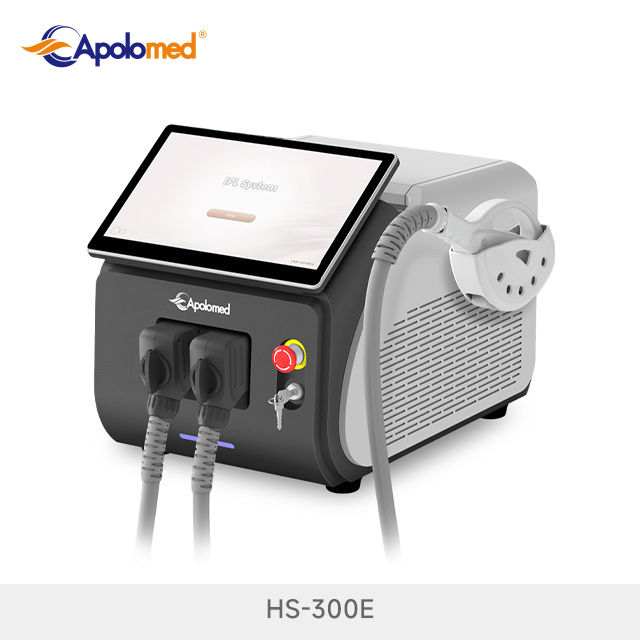
Modern clinical systems transform traditional ipl hair removal through superior optical design. The Apolomed Medical CE IPL SHR stands as a prime example of advanced aesthetic technology. This professional painless ipl hair removal machine features a high-performance dual-lamp configuration alongside versatile SHR operating modes. Dual-lamp engineering boosts output stability while supporting specialized treatment modes like Professional, Stack, and Smart settings.
The system utilizes dynamic 'In-Motion' sliding technology to protect surrounding tissue. Standard devices deliver harsh single energy spikes. In contrast, the Apolomed unit emits rapid, low-energy pulses continuously as the applicator glides over target skin zones.
- Even energy distribution: The applicator delivers light pulses uniformly, eliminating painful localized energy hotspots.
- Gradual heat accumulation: High repetition rates warm follicles progressively to the critical thermal threshold without skin irritation.
- Advanced contact cooling: Integrated cooling mechanisms protect sensitive epidermal layers from thermal damage.
Patients feel only a mild warming sensation during treatment sessions. The multi-wavelength capabilities support nine interchangeable filters, including 420nm, 510nm, 560nm, 610nm, 640~1200nm, 690~950nm, and SHR options. Generous spot sizes such as 15x50mm enable fast coverage, ensuring superior treatment results across large body regions. Consequently, practitioners optimize light delivery for unique skin tones to secure outstanding clinical results effortlessly.
Pain Levels: Pain-Free IPL vs Traditional Laser Hair Removal
Patients experience vastly different sensory feedback during hair elimination procedures. Traditional laser hair removal fires a single high-energy pulse into target sites. This intense energy burst creates a sudden shock that feels like a sharp rubber-band snap against skin. In contrast, modern ipl treatment relies on continuous low-energy light emissions. These gentle pulses warm the hair follicle progressively over time. This gradual thermal buildup delivers effective hair reduction without severe discomfort. Furthermore, mechanical pressure from applicator contact stimulates large-diameter nerve fibers. This physiological reaction blocks pain signals before they reach the brain.
Cooling Mechanisms and Discomfort Levels
Advanced cooling systems play a crucial role in patient safety during light-based care. High temperatures can cause superficial tissue damage without adequate protective buffers. Modern devices incorporate sophisticated chilling components to shield delicate skin. For instance, Apolomed features Cool Comfort technology and advanced adjustable contact cooling. This mechanism chills the epidermis continuously before, during, and after every pulse release.
Clinical Insight: The cooling mechanism provides a protective buffer. It allows a higher intensity of light to be used more safely, as the risk of the superficial skin overheating is greatly diminished.
This continuous thermal protection creates a larger protective window within superficial skin layers. Practitioners can apply energy levels up to 40 J/cm2 comfortably when using 2 to 3 second pre-cooling times. The advanced surface chilling lowers cutaneous sensitivity effectively. Thus, a professional painless ipl hair removal machine maintains optimal patient safety while targeting deep hair follicles safely. High fluence settings achieve superior destruction without inducing epidermal thermal trauma.
Session Speed and Skin Recovery Time
Treatment speed and skin recovery rates directly influence overall client satisfaction. Traditional laser treatments deliver energy through small spot sizes. Conventional laser treatments require precise manual placement over target areas. Operators must lift and reposition the handpiece repeatedly over target body zones. This step-by-step process slows operational velocity considerably during large clinical sessions.
Modern ipl devices utilize rapid pulse repetition rates combined with generous spot dimensions. Fast-motion sliding technology allows operators to glide handpieces continuously across target areas. This dynamic movement improves operational comfort and speed during comprehensive care.
- Integrated contact cooling prevents heat buildup, allowing patients to resume normal daily routines immediately without recovery delays.
- Fast gliding motions shorten procedure times significantly while providing pain-free experiences across expansive treatment zones.
- Uniform light dispersion creates consistent smooth skin results across varying bodily areas without creating thermal hotspots.
Most individuals experience zero downtime following these pain-free hair removal treatments. Mild cutaneous redness subsides within minutes after light exposure. Consequently, professional hair removal treatment clinics provide exceptional aesthetic results while maintaining total patient comfort always.
Skin Tone Safety and Hair Type Suitability
Fitzpatrick Scale and Melanin Absorption
Skin melanin absorbs light energy alongside target hair follicles during optical procedures. Fitzpatrick skin types I through III contain low epidermal melanin levels. These lighter complexions allow optical energy to reach deep hair roots safely. Consequently, standard ipl systems achieve high effectiveness and superior hair reduction results on fair skin.
Darker complexions absorb higher energy amounts within surface skin layers. This energy absorption creates severe thermal risks, including burns, hyperpigmentation, and hypopigmentation. Practitioners evaluate skin parameters carefully to maintain treatment safety and minimize cutaneous risks.
- Traditional broad-spectrum ipl (500–1200 nm) poses a high risk of epidermal burns on dark skin types IV through VI.
- Diode laser systems (808–810 nm) offer moderate suitability for dark skin tones with potential mild swelling.
- Nd:YAG laser units (1064 nm) remain the gold standard for dark skin due to minimal risks to surface skin.
Traditional laser treatments require precise wavelength adjustments to protect dark epidermal tissue.
Customizing Wavelengths with Interchangeable Filters
Modern professional devices adjust light spectrums to treat various skin types safely. Advanced SHR technology utilizes gradual thermal accumulation rather than sudden energy spikes. This motion delivery method provides effective hair removal on darker skin tones with high safety standards.
Technical Insight: By employing different optical filters to block specific wavebands, a single IPL device can be adapted for various clinical needs. This flexibility allows practitioners to adjust the energy to target hair follicles at various depths or focus on specific chromophores like melanin and hemoglobin depending on the patient's skin type.
Professional systems utilize interchangeable filters spanning 420nm to 1200nm spectrums. Specialized filter cut-offs like 640nm and 695nm direct optical energy deep into hair follicles. Custom wavelength selection optimizes laser hair removal performance across dense body hair. Professional practitioners ensure ideal treatment outcomes without causing thermal epidermal damage.
Treatment Timelines, Efficiency, and Overall Cost
Session Counts and Permanent Reduction Expectations
Patients evaluate session numbers before starting therapy. Professional laser hair removal targets active hair growth cycles precisely. Patients usually schedule 6 – 10 laser treatments to attain permanent hair reduction. Clinical ipl systems also target active cycles. Patients complete 10 – 15 ipl sessions to secure smooth outcomes. Users of at-home ipl often experience lower effectiveness due to capped energy limits. Conversely, professional clinical systems maximize follicle damage safely and quickly.
Modern light devices accelerate treatment speed while maintaining high quality standards. Clinics employ advanced systems to deliver effective results across varied skin types. High energy output disables follicle roots effectively. Patients gain permanent hair removal after completing full treatment plans. Regular session schedules maximize long-term smoothness and control active hair regrowth.
Comparing Professional Laser Packages and IPL Value
Financial considerations guide long-term treatment decisions. Individual session costs vary by body zone and device technology. Patients evaluating at-home ipl options balance low upfront cost against higher overall session requirements and slower progress. Professional care delivers superior permanent results and maximum patient safety through calibrated clinical parameters.
Painless IPL provides high speed, comfort, and safety during hair removal treatments. Laser options disrupt follicles fast with higher discomfort. Patients evaluate pain tolerance, budget, skin tone, and convenience when selecting methods. A professional clinic using the Apolomed IPL SHR delivers pain-free care. This professional painless ipl hair removal machine ensures superior results.
FAQ
Is professional laser hair removal safe for all skin types?
Certified professional technicians evaluate skin parameters carefully. High melanin levels present burn risks on dark skin. Proper wavelength selection minimizes cutaneous risks effectively during therapy.
How does at-home ipl compare to clinical devices?
Low energy limits on at-home ipl units yield temporary suppression rather than permanent hair removal. Clinical ipl systems disable hair follicles safely to ensure smooth outcomes.
Can patients expect pain-free sessions during professional care?
Modern devices utilize advanced contact cooling to deliver a pain-free treatment. This dynamic protection prevents thermal risks and delivers comfortable hair elimination.
Post time: Aug-14-2026


