An eo q-switch nd yag laser delivers high clinical performance in modern dermatological practices. Active q-switched technology emits ultra-short nanosecond pulses and peak energy for targeted photoacoustic destruction of pigment with minimal thermal damage. This guide helps practice owners analyze technical parameters, comparative advantages, and return on investment to select an optimal q-switched nd:yag laser.
Understanding EO Q-Switch ND YAG Laser Science
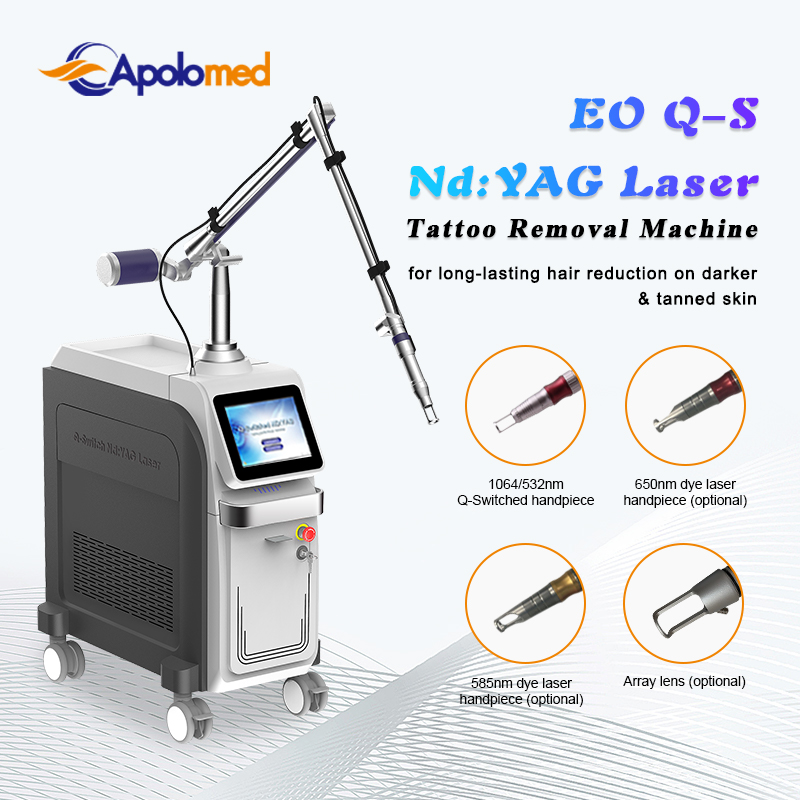
Active Pockels Cell vs Passive Mechanisms
An electro-optic Pockels cell controls light pulse timing with high precision. Active systems use external electro-optic modulators to emit energy pulses at exact intervals with minimal timing jitter. Passive systems rely on saturable absorbers instead. That operational reliance causes timing fluctuations and pulse variability during procedures.
Active modulation delivers uniform energy output during each emitted pulse. High peak power output targets unwanted ink particles effectively. The active q-switched system limits thermal spread inside surrounding tissue. This controlled action protects healthy skin cells during delicate clinical procedures. Practitioners rely on specialized nd:yag technology for reliable beam delivery and pulse control.
Shattering Pigment with Q-Switched Nd YAG Laser Energy
An active eo q-switch nd yag laser converts optical energy into photoacoustic shockwaves. Ultra-short pulse widths down to 4 nanoseconds strike pigment rapidly. The photoacoustic force shatters target ink effectively without thermal damage.
Shot-to-shot energy variance stays under ±3% for maximum clinical stability. A premium q-switched nd yag laser optimizes system safety. Practitioners deploy the primary 1064nm nd:yag wavelength for deep dermal pigment. They select the frequency-doubled 532nm nd:yag setting for superficial epidermal lesions. A dedicated q-switched nd yag laser workstation improves overall clinical performance. Consistent energy output produces superior treatment outcomes across diverse skin types. Modern aesthetic practices utilize a high-powered q-switched nd yag laser to clear stubborn tattoos efficiently. Deploying an additional q-switched nd yag laser expands daily practice capabilities. An operational eo q-switch nd yag laser ensures long-term treatment reliability.
Clinical Applications of Q-Switched Nd:YAG Laser Tech
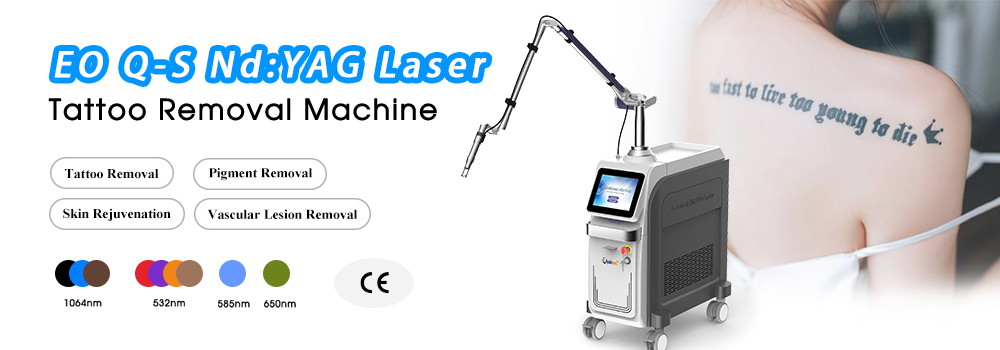
Multi-Color Tattoo and Pigmentation Removal
Modern medical practices utilize the q-switched nd:yag laser to treat targeted ink particles safely. Clinicians depend on high peak power during laser tattoo removal to shatter dark pigments deep within the dermis. Dual-wavelength settings enable effective tattoo removal across various ink colors. Photomechanical waves fragment exogenous dyes while preserving adjacent cellular structures.
A high-powered q-switched nd yag laser addresses complex epidermal lesions. The active q-switched nd yag laser system provides consistent energy delivery to clear solar lentigines and melasma. Another q-switched nd yag laser configuration helps clear dermal birthmarks efficiently. Patients receive superior skin rejuvenation and pigmentation treatment with predictable treatment outcomes. An additional q-switched nd:yag laser expands overall clinic capabilities significantly.
Skin Rejuvenation and Vascular Lesion Treatments
Clinicians deploy the nd:yag wavelength for non-ablative facial toning procedures. The focused nd:yag beam stimulates structural collagen production to address widespread skin concerns. This deep acoustic action refines skin texture without disrupting delicate epidermal layers. Practitioners target persistent skin concerns with controlled pulses from a q-switched nd yag laser.
The frequency-doubled 532nm nd yag laser mode targets superficial vascular structures effectively. As noted by Collyer et al. (2010), this KTP wavelength selective absorption by oxyhemoglobin minimizes thermal damage during clinical procedures. A versatile q-switched nd:yag laser platform supports critical treatment indications:
- Vascular lesion management, including cherry angiomas, using precise 532nm nd yag output
- Dermal collagen remodeling to address secondary skin concerns
- High-speed laser tattoo removal using 1064nm nd yag energy pulses
Essential Features of a Premium Laser Machine
Flat-Top Beam Profile and Energy Stability
Medical practices require reliable equipment to deliver uniform energy. A top-tier laser machine utilizes a flat-top beam profile to distribute optical energy evenly. This homogeneous beam prevents hot spots while reducing thermal injury in healthy tissue. Energy stability ensures predictable clinical results.
Practitioners measure several key performance indicators when evaluating a high-powered laser machine:
- Pulse Duration: Shorter pulses improve pigment fragmentation efficiency.
- Beam Quality (M²): Lower values indicate better focus and penetration.
- Repetition Rate: Higher rates enable faster treatments and improved workflow.
Active modulation systems maintain low energy variance across sequences. The primary nd yag beam ensures consistent optical output. A premium q-switched nd yag laser delivers stable beam profiles for optimal treatment safety.
Dual-Wavelength Versatility: 1064nm and 532nm
A versatile q-switched nd:yag laser offers dual wavelengths for diverse skin conditions. At 1064nm, melanin and hemoglobin exhibit negligible photoabsorption, making water the primary chromophore. This property makes the 1064nm nd:yag setting safe for darker skin types. Clinicians deploy this nd:yag pulse to prevent collateral damage. Conversely, green light at 532nm absorbs strongly into melanin across the 400–1100 nm range, while oxyhemoglobin displays peak absorption between 400–600 nm.
Clinicians match target pigmented lesions with the active wavelength:
| Wavelength | Pigmented Lesion Types |
|---|---|
| 532 nm | Freckles, sunspots, age spots (superficial pigmentation) |
| 1064 nm | Deeper pigmented lesions; safe for darker skin tones |
Green light from a 532nm q-switched nd yag laser treats freckles efficiently because shorter wavelengths absorb strongly into superficial melanin. Clinicians switch to the 1064nm nd yag pulse to target deep dermal ink. This deep nd yag emission destroys target ink rapidly. Modern practices deploy a q-switched nd:yag laser workstation to expand clinical options. Practitioners trust a q-switched nd yag laser for consistent treatment success.
High-Performance Solution: Apolomed HS-290A
Multi-Mode Capabilities: Q-Switched, SPT, and Long Pulse
The Apolomed HS-290A sets a high clinical standard for electro-optic aesthetic workstations. Modern practices deploy this eo q-switch nd yag laser to achieve exceptional treatment performance across diverse patient profiles. The system incorporates three distinct functional settings: q-switched, SPT, and Long Pulse modes. Clinicians utilize these versatile settings to perform targeted tattoo removal and clear stubborn dermal pigmentation like Nevus of Ota.
The 1064nm long pulse mode provides distinct safety advantages for laser hair removal. Light at this primary nd yag wavelength penetrates deep into the dermis with minimal epidermal scatter. Reduced melanin absorption allows target follicles to absorb thermal energy safely on darker skin types. Clinicians also utilize this mode for non-ablative skin resurfacing to treat widespread skin concerns effectively.
Advanced System Control and Cooling Architecture
A specialized articulated arm delivers optical energy with external and self-restoration calibration. This advanced laser machine maintains a homogeneous flat-top beam profile to eliminate localized hot spots. Uniform energy delivery protects healthy tissue while providing reliable treatment outcomes. Clinicians trust the robust q-switched technology during delicate nd:yag procedures.
This laser machine platform integrates sophisticated digital management features to streamline daily practice operations. An intuitive 9.7-inch touch screen operates on an ARM-A9 CPU running an Android system with smart IC management. An advanced air and water cooling system prevents thermal overload during high-power q-switched output. This cooling architecture maintains internal system stability during extended nd yag laser sessions. Practitioners rely on the primary nd:yag wavelength to complete efficient tattoo removal. They select the 1064nm nd:yag beam to address stubborn skin concerns safely. Another dedicated nd yag setting optimizes thermal delivery for predictable daily care.
Guide to Buying Q-Switched Nd YAG Lasers
Evaluating Laser Machine Specs and ROI
Medical directors evaluate key performance indicators when buying q-switched nd yag lasers for modern aesthetic clinics. High peak power and energy stability ensure predictable clinical outcomes. An active q-switched nd yag laser optimizes treatment efficiency across tattoo removal and pigmentation procedures. Practitioners deploy a q-switched nd yag laser to broaden clinical offerings. Practice owners generate consistent revenue by offering controlled q-switched performance during treatments.
Clinicians select a high-performance laser machine to lower operational overhead. Long-term profitability requires clinical training for operating staff. Comprehensive training programs reduce practitioner error and protect patient safety. Robust training boosts staff confidence during complex care. Proper operational training maximizes total patient volume and speeds up investment returns. High safety and regulatory compliance standards safeguard the practice against operational liabilities.
Device Reliability and After-Sales Support
Practice managers face critical operational decisions when buying q-switched nd yag lasers. Unplanned equipment breakdowns cause immediate revenue loss and disrupt appointment schedules. A comprehensive warranty and strong manufacturer support protect daily clinic operations. Reliable post-purchase technical support guarantees quick system repair and minimizes facility downtime. Top manufacturers deliver prompt customer support to maintain operational continuity.
Purchasing a dependable q-switched nd yag laser requires written service commitments. Reputable vendors offer ongoing customer support and specialized training programs to enhance clinical skill sets. Interactive training programs elevate provider proficiency across diverse skin types. Specialized nd yag settings expand practice capabilities. A premier q-switched nd yag laser delivers precise nd yag energy output. Operating a dual-wavelength nd yag system provides versatile nd yag pulses. Another laser machine configuration offers dedicated q-switched emission. Strong technical support preserves device functionality over time. Medical practices secure long-term success through dependable vendor support. Clinics value ongoing service support during daily operations.
Active Pockels cell control outperforms passive systems by maintaining energy variance under 3%. Key criteria include flat-top beam delivery and multi-mode settings. Workstations like Apolomed HS-290A deliver high ROI. Practice managers can consult specialists regarding an eo q-switch nd yag laser. Medical directors should request trials for a q-switched nd:yag laser. This q-switched nd:yag laser ensures precision.
FAQ
Q What clinical benefits does a q-switched nd yag laser offer?
An active q-switched nd yag laser shatters target pigment cleanly with minimal thermal damage and precise nd yag control. Staff training improves procedure safety, while dedicated technical support and service support preserve equipment functionality, with operational training ensuring long-term reliability.
Q How does a dual-wavelength q-switched nd yag laser function?
This q-switched nd yag laser delivers a 1064nm nd yag beam for deep ink and 532nm nd yag energy for superficial spots. Operator training and maintenance support improve treatment outcomes.
Q Why do medical practices require vendor support and safety training?
Responsive customer support prevents downtime. Device training, laser training, clinical training, and compliance training boost revenue, while a q-switched nd:yag laser relies on field support and focused energy delivery.
Post time: Aug-20-2026


