Understanding EO Q-Switch ND YAG Laser specifications is essential for professionals who demand high performance and safety in clinical, cosmetic, and industrial environments. The right technical parameters—like pulse energy, timing control, and wavelength coverage—directly influence treatment results and user safety.
| Specification Type | Impact on Performance and Safety Outcomes |
|---|---|
| Pulse Energy | High peak power is crucial for effective micromachining and dermatology applications. |
| Timing Control | Precise timing is essential for synchronization in applications like lidar and spectroscopy, improving measurement accuracy. |
| Wavelength Coverage | A broad range (192–2000 nm) allows for versatility in applications, affecting the effectiveness in various tasks. |
| Compliance with Standards | Adhering to safety standards (IEC 60825-1, ANSI Z136) enhances safety in medical and industrial settings. |
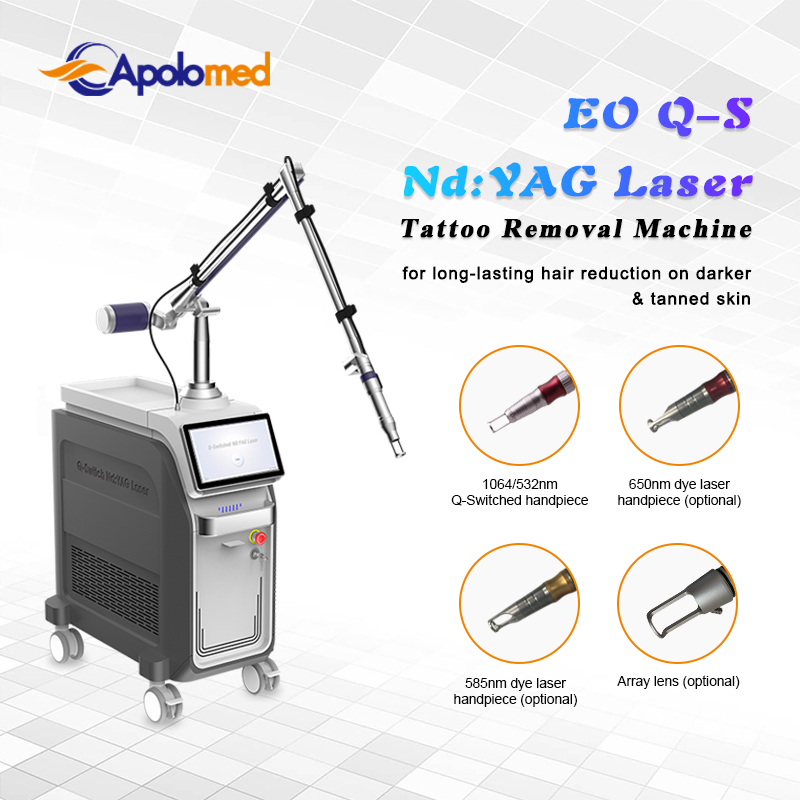
EO Q-Switch ND YAG Lasers offer multiple wavelengths, high energy, and precise control. These features make them suitable for advanced procedures. apolomed’s HS-290B stands out as a reliable and innovative laser system, especially for long-lasting hair removal on darker or tanned skin.
EO Q-Switch ND YAG Laser: Key Specifications
Wavelengths: 1064nm, 532nm, 355nm, 266nm
EO Q-Switch ND YAG Lasers offer multiple wavelength options. Each wavelength serves a unique purpose in clinical and cosmetic treatments. The 1064nm wavelength penetrates deeply and is ideal for laser hair removal, especially on darker or tanned skin. The 532nm wavelength targets vascular lesions and brown or red skin damage with minimal side effects. The 355nm and 266nm wavelengths are used for specialized procedures, such as pigment removal and precision micromachining.
| Wavelength | Clinical Significance |
|---|---|
| 1064nm | Effective for laser hair removal and deeper penetration for darker or inflamed tissues. |
| 532nm | Effective for treating vascular skin lesions and brown/red skin damage, with minimal side effects. |
The apolomed HS-290B utilizes these wavelengths to deliver versatile treatments. Professionals can select the optimal wavelength for each patient or application, improving outcomes and safety.
Pulse Duration and Q-Switching
Pulse duration is a key factor in laser performance. EO Q-Switch ND YAG Lasers can produce short pulses, sometimes as brief as 9.4 nanoseconds. These short pulses deliver high peak power and precise energy to the target area. Q-switching technology enhances precision by creating symmetrical pulse waveforms. This feature is essential for high-precision laser processing and medical aesthetics. The ability to control pulse energy and duration allows professionals to minimize thermal damage and maximize treatment effectiveness.
Energy Output and Peak Power
Pulse energy and high peak power are critical for both clinical and industrial applications. EO Q-Switch ND YAG Lasers provide high energy output, enabling faster and more efficient material processing. Excellent beam quality ensures accurate cutting and welding. The output power depends on the repetition rate and absorbed pump power. Higher repetition rates and pump power increase the output, making these lasers suitable for demanding tasks.
·The output power of the laser is dependent on the repetition rate.
·Higher absorbed pump power leads to increased output power.
The apolomed HS-290B delivers strong pulse energy, supporting a wide range of treatments and procedures.
Repetition Rate and Flexibility
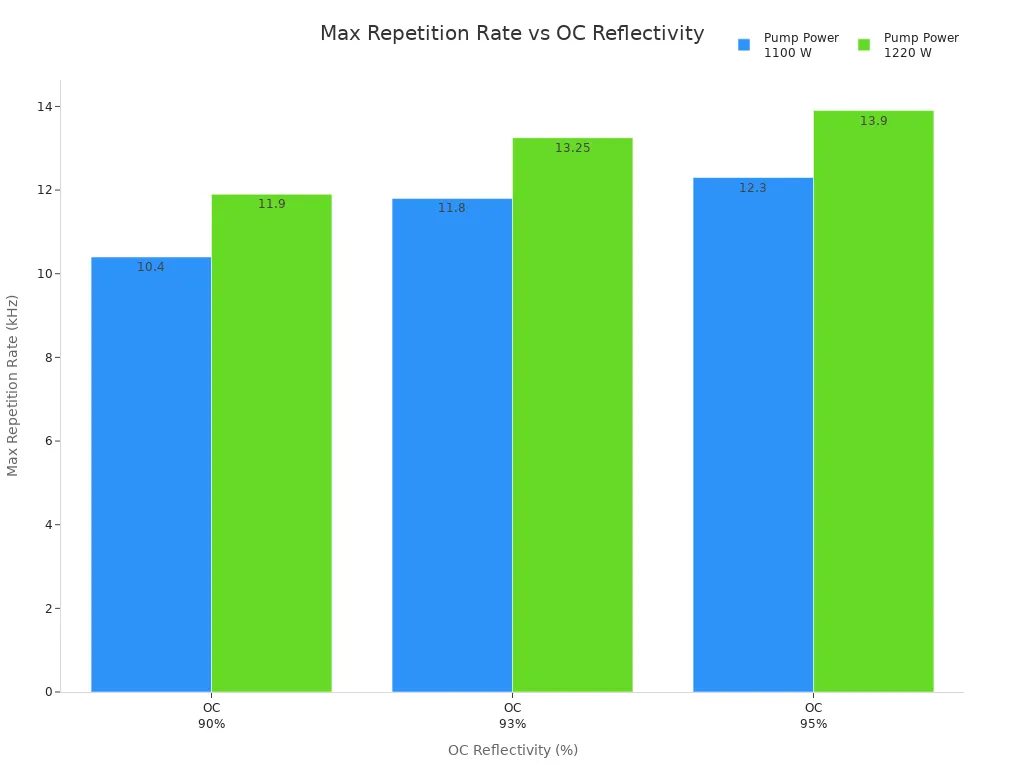
Repetition rate measures how often the laser fires pulses. EO Q-Switch ND YAG Lasers offer flexible repetition rates, which enhance operational versatility. Professionals can adjust the repetition rate to match the needs of each procedure. Higher repetition rates allow for faster treatments and improved efficiency.
| Pump Power (W) | OC Reflectivity (%) | Maximum Repetition Rate (kHz) |
|---|---|---|
| 1100 | 90 | 10.40 |
| 1100 | 93 | 11.80 |
| 1100 | 95 | 12.30 |
| 1220 | 90 | 11.90 |
| 1220 | 93 | 13.25 |
| 1220 | 95 | 13.90 |
The HS-290B features both professional and treatment modes, allowing users to tailor repetition rates and pulse energy for each application.
Beam Quality and Divergence
Beam quality affects the precision and safety of laser treatments. Fine-tuned EO Q-Switch ND YAG Lasers provide enhanced precision and controllability. This precision is vital for procedures that require specific energy delivery profiles. High beam quality minimizes thermal damage to surrounding tissues, ensuring effective and safe treatments. The 1.44μm radiation from Q-switched laser systems has higher absorption in liquid water, which further improves safety during medical applications.
Cooling Systems and Stability
Cooling systems play a vital role in maintaining laser stability and performance. EO Q-Switch ND YAG Lasers often use advanced air cooling or water cooling methods. These systems prevent overheating and ensure consistent pulse energy output. The apolomed HS-290B uses efficient air cooling, which supports long treatment sessions and maintains reliability. Stable cooling systems help extend the service life of the laser and reduce maintenance needs.
Tip: Choosing a laser with robust cooling and stable pulse energy output, like the apolomed HS-290B, ensures reliable performance and safety for both patients and operators.
Q-Switched Laser Systems: Performance Impact
Efficacy and Precision in Treatments
Q-switched laser systems have set a high standard for efficacy in both medical and cosmetic procedures. These systems deliver short pulses with high peak power, which allows for precise targeting of pigments and tissues. Pulse energy plays a critical role in breaking down tattoo ink and treating pigmentation issues. Studies show that the 1064 nm wavelength provides higher pulse energy and fluence compared to 532 nm, making it especially effective for deeper pigments and darker skin types. The versatility of the ND:YAG Q-switched laser makes it a reliable choice for practitioners. It offers cost-effectiveness and proven safety, especially when compared to newer technologies. The apolomed HS-290B, an eo q-switch nd yag laser, stands out for its ability to deliver consistent results across a wide range of treatments.
Industrial and Scientific Applications
Q-switched laser systems are not limited to clinical settings. They play a vital role in industrial and scientific fields. These lasers provide high average power, rapid repetition rates, and strong pulse energy, which are essential for tasks like micromachining and material processing.
| Metric | Value |
|---|---|
| Average Power | 403 W |
| Repetition Rate | 12.0 kHz |
| Maximum Pulse Energy | 57 mJ |
| Pump Power | 1220 W |
| Reflectivity of Output Coupler | 93% |
These performance metrics show why q-switched laser systems are trusted for precision work. Their ability to deliver consistent energy output ensures accuracy and repeatability in scientific experiments.
Safety and Patient Outcomes
Safety remains a top priority when using q-switched laser systems. Clinical studies report that more than 70% of patients see improvement after treatment. Most side effects, such as mild textural changes or transient hyperpigmentation, resolve quickly and do not lead to permanent issues.
| Safety Outcome | Result |
|---|---|
| Improvement in patients | More than 70% showed improvement |
| Transient post-inflammatory hyperpigmentation | Observed in 4 (8%) patients, cleared within 2 months |
| Textural changes | Mild changes in 2 patients, no scarring |
| Permanent pigmentary changes | No cases reported |
Q-switched laser systems, especially those with advanced cooling and stable pulse energy like the apolomed HS-290B, help ensure safe and effective outcomes for both patients and operators.
Practical Applications of EO Q-Switch ND YAG Lasers
Medical and Aesthetic Use Cases
EO Q-Switch ND YAG Lasers have become essential tools in many professional settings. These lasers deliver short pulses and high peak power, making them suitable for a wide range of applications. Professionals use these systems to achieve precise results and improve performance in treatments. The most common applications include:
1.Tattoo removal: Lasers break down multi-colored ink, with specific wavelengths targeting different colors.
2.Pigmented lesions and skin discoloration: Lasers treat melasma and post-inflammatory hyperpigmentation by breaking down melanin clusters.
3.Skin brightening and rejuvenation: Carbon laser facials improve skin texture and brightness.
4.Hair removal: Lasers reduce fine hair by targeting melanin in hair follicles.
5.Vascular conditions: Lasers treat varicose veins and rosacea by collapsing blood vessels through selective photothermolysis.
These applications rely on precise pulse energy and consistent performance to deliver safe and effective outcomes.
apolomed HS-290B: Brand Solutions
apolomed HS-290B stands out as a reliable solution for professionals. This laser system offers multiple wavelengths and adjustable pulse energy, supporting a broad range of applications. The professional mode and treatment mode allow users to optimize performance for each procedure. Efficient air cooling ensures stable operation during long sessions. The HS-290B is especially effective for hair removal on darker and tanned skin, thanks to its 1064nm wavelength and high peak power. Professionals benefit from consistent results and enhanced safety, making this laser a valuable addition to any practice.
Note: apolomed HS-290B provides advanced features that help professionals achieve superior outcomes in both medical and aesthetic applications.
Comparison with Other Laser Types
Professionals often compare EO Q-Switch ND YAG Lasers with other laser systems to select the best option for their needs. The table below highlights key differences:
| Feature | EO Q-Switch ND YAG Laser | Other Laser Types |
|---|---|---|
| Technology | Active Q-switch | Passive Q-switch |
| Pulse Output | Single pulse | Multi-pulse |
| Energy Stability | Better | Variable |
| Pulse Width | 6-10 ns | Longer |
| Treatment Effectiveness | High peak power | Lower peak power |
EO Q-Switch ND YAG Lasers deliver stable pulse energy and high peak power, which improve performance and expand the range of applications. These advantages make them a preferred choice for professionals seeking reliable results.
Interpreting Laser Datasheets
Key Data Points to Review
Professionals must understand the information in a laser datasheet to make informed decisions. The datasheet provides details about the laser’s performance and safety. Reviewing the right data points helps users select the best system for their needs.
·Wavelengths: Check which wavelengths the laser offers. Different wavelengths suit different treatments.
·Pulse energy: Look for the maximum and adjustable pulse energy. This value affects treatment effectiveness and safety.
·Pulse duration: Shorter pulse duration means higher precision. It also reduces unwanted thermal effects.
·Repetition rate: This shows how often the laser fires. Higher rates can speed up treatments.
·Beam quality: Good beam quality ensures accurate targeting and minimizes side effects.
·Cooling system: Reliable cooling keeps the laser stable during long sessions.
·Safety features: Confirm compliance with standards and built-in safety mechanisms.
Note: apolomed HS-290B provides clear datasheets with all key data points. Professionals can trust this laser for consistent pulse energy and reliable performance.
Common Pitfalls and Misleading Specs
Some datasheets may include specs that confuse buyers. It is important to recognize common pitfalls to avoid mistakes.
1.Overstated pulse energy: Some datasheets list peak values that are not achievable in real-world settings. Always check for average and practical pulse energy.
2.Ambiguous repetition rate: Manufacturers may highlight maximum rates without noting limitations at higher settings.
3.Incomplete cooling details: Missing information about the cooling system can lead to overheating and reduced laser lifespan.
4.Beam quality claims: Vague descriptions may hide poor performance. Look for specific measurements.
5.Safety compliance: Specs should mention recognized standards. Lack of this information can signal risks.
| Pitfall | What to Watch For |
|---|---|
| Pulse energy | Peak vs. average values |
| Repetition rate | Maximum vs. practical rates |
| Cooling system | Detailed specs |
| Beam quality | Measured values |
| Safety compliance | Standards listed |
Tip: Always compare datasheets from trusted brands like apolomed. The HS-290B offers transparent specs and proven pulse energy for professional use.
Reliability, Safety, and Maintenance
Reliability Metrics and Service Life
Reliability is a key factor when selecting a laser for clinical or industrial use. Professionals look for systems that deliver consistent high peak power and stable output over time. The service life of a laser depends on several factors, including the quality of its components and the effectiveness of its cooling system. Regular use of short pulses helps maintain precise energy delivery and reduces wear on internal parts. Brands like apolomed design their systems, such as the HS-290B, to support long-term performance and minimize downtime. Reliable lasers help ensure that treatments remain effective and safe for both operators and clients.
Safety Features and Compliance
Safety is essential in any setting where lasers are used. Modern systems include multiple safety features to protect users and patients. The following table outlines important compliance standards and safety features:
| Compliance Standard/Safety Feature | Description |
|---|---|
| ISO 13485 Certification | Ensures the manufacturer adheres to a quality management system for medical devices. |
| Laser Safety Features | Includes interlocks, emergency stop buttons, protective eyewear, and skin type sensors. |
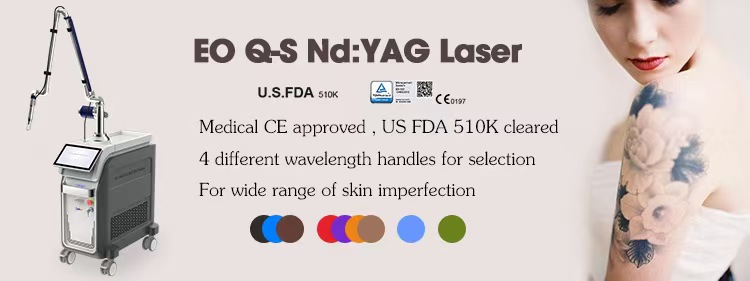
| Safety & Compliance Note | Verify certification under ISO 13485 and other relevant regulations (FDA 510(k), CE Marking). |
Professionals should always check for these certifications before purchasing a laser. The apolomed HS-290B meets strict safety standards, making it a trusted choice for clinics and labs.
Maintenance Best Practices
Proper maintenance is vital for optimal performance and long service life. Here are some best practices:
·Calibrate the laser regularly to ensure accurate energy output.
·Clean the lens to maintain beam quality.
·Follow the manufacturer’s maintenance schedule.
·Use effective cooling methods, such as air cooling, to protect the device and enhance treatment results.
·Evaluate technical support and training from the vendor.
·Ensure spare parts are available when needed.
Tip: Consistent maintenance not only improves performance but also extends the lifespan of your equipment. Choosing a reliable brand like apolomed ensures access to support and quality parts.
Selecting the Right EO Q-Switch ND YAG Laser
Matching Specs to Application Needs
Choosing the right laser for professional use requires a clear understanding of how specifications align with different applications. Each application demands specific features for optimal performance. For example, tattoo removal depends on matching the laser wavelength to the color of the tattoo pigment. The absorption spectrum of the pigment determines which wavelength will be most effective. Q-Switched 1064 nm lasers work best for dark blue and black tattoos, while 532 nm lasers are more effective for red and orange tattoos.
| Wavelength (nm) | Suitable Tattoo Colors |
|---|---|
| 1064 | Black and Blue Tattoos |
| 532 | Red and Brown Tattoos |
·Wavelength is crucial for effective tattoo removal.
Short pulses are important for minimizing damage to surrounding tissue and improving safety. Applications such as skin rejuvenation, pigment removal, and vascular treatments also benefit from precise wavelength selection and stable energy output. Professionals should consider the range of applications they plan to offer and select a system that provides the necessary flexibility. The apolomed HS-290B offers multiple wavelengths and adjustable settings, making it a strong choice for clinics with diverse needs.
Questions for Vendors and Manufacturers
Before purchasing a laser, professionals should ask vendors key questions to ensure the system meets their application requirements and delivers reliable performance:
·What wavelengths does the system support, and which applications are they best suited for?
·How consistent is the energy output across different settings?
·What cooling system is used, and how does it affect long-term stability?
·Are there different modes for professional and treatment use?
·What certifications and safety features are included?
·What is the expected service life, and what maintenance is required?
·Is technical support and training available?
Tip: Always request detailed datasheets and verify that the system, such as the apolomed HS-290B, matches your application needs and safety standards. This approach helps ensure the best results for both operators and clients.
Understanding EO Q-Switch ND YAG Laser specifications helps professionals make informed choices. Each specification shapes performance, safety, and treatment results. The table below shows how datasheets, brand reputation, and application needs guide selection:
| Factor | Role in Selection |
|---|---|
| Technical Specifications | Datasheets reveal key details for comparing laser systems. |
| Brand Reputation | Trusted brands like apolomed offer proven reliability and support. |
| Application Needs | Versatile lasers, such as the HS-290B, adapt to many procedures and skin types. |
Review datasheets, consider reputable brands, and match features to your needs for the best outcomes.
FAQ
What makes q-switched laser systems ideal for tattoo removal?
Q-switched laser systems deliver short, high-energy pulses. These pulses break down tattoo pigments without damaging surrounding skin. Professionals prefer these systems for their precision and effectiveness.
How does the apolomed HS-290B improve treatment outcomes?
The apolomed HS-290B offers multiple wavelengths and adjustable settings. It supports professional and treatment modes. Efficient air cooling ensures stable performance during long sessions.
Are q-switched laser systems safe for darker skin tones?
Yes. Q-switched laser systems, especially those with a 1064nm wavelength, are safe for darker and tanned skin. The apolomed HS-290B is designed for these skin types.
What maintenance is required for q-switched laser systems?
Regular calibration, lens cleaning, and following the manufacturer’s schedule keep the system reliable. Air cooling helps protect internal components and extends service life.
How do I choose the right q-switched laser system for my clinic?
Review datasheets for wavelength options, energy output, and cooling systems. Trusted brands like apolomed provide reliable performance and support. Match specifications to your clinic’s needs.
Post time: Mar-17-2026


