Treating stubborn brown spots demands precision. The HS-411 from Apolomed delivers this through a unique energy system that limits thermal spread to healthy melanocytes. This article compares energy output, precision, safety, and clinical evidence for pigmentation. The goal offers a data-driven answer for patients and practitioners. Learn more at https://global.apolomed.com/co2-laser-hs-411.html.
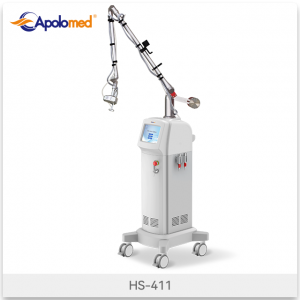
HS-411 Specs for Brown Spot Precision
The HS-411 from Apolomed operates at a 10600nm wavelength with a CO2 laser medium. The beam is delivered with exceptional stability. These core specifications form the foundation for precise pigment treatment. The system pairs this architecture with a suite of adjustable parameters that give practitioners fine control over every treatment session.
The co2-laser-hs-411 Advantage
The HS-411's design philosophy centers on controlled energy delivery. The CO2 laser system produces consistent output pulse after pulse. This consistency matters for brown spot treatment because uneven energy can damage healthy tissue. The system eliminates beam distortion that can occur with fiber-optic delivery systems. Practitioners can position the handpiece precisely over irregular lesions without compromising beam quality.
The smart operator interface features an 8-inch touch screen. This interface allows fingertip control over all treatment parameters. The system also includes a 635nm aiming beam with adjustable brightness. This visible guide helps practitioners target brown spots accurately before activating the laser. The combination of stable beam delivery and precise aiming reduces the risk of treating healthy skin.
Precision Delivery for Pigment
The HS-411 offers several parameters that directly impact pigment treatment precision. The table below summarizes these specifications:
| Technical Specification | Precision-Related Function |
|---|---|
| Ultra-short pulse (U.Pulse: 100~900us) | Minimizes thermal damage to surrounding tissue |
| Energy: 1~300mJ/dot | Enables fine control over treatment depth and intensity |
| Density: 25~3025PPA/cm² (12 levels) | Adjusts how densely laser spots are placed |
| Pulse width: 0.1~50ms/dot | Controls duration of laser exposure |
| Scan area: 20x20mm | Provides flexibility to match lesion shape |
| Adjustable fractional size & drawing function | Defines and treats only targeted brown spot areas |
The ultra-short pulse mode stands out for pigment work. Pulses of 100 to 900 microseconds ablate the spot while limiting heat spread to surrounding melanocytes. This reduces the risk of post-inflammatory hyperpigmentation, a common concern for darker skin tones. The adjustable fractional size and drawing function allow practitioners to trace irregular lesions precisely. They can treat only the brown spot and spare healthy skin. For more details on these specifications, visit https://global.apolomed.com/co2-laser-hs-411.html. The energy range of 1 to 300mJ per dot gives fine control over ablation depth. Practitioners can match treatment intensity to the specific thickness of each lesion. This level of control makes the HS-411 a strong choice for practitioners who prioritize safety alongside efficacy. Additional information is available at https://global.apolomed.com/co2-laser-hs-411.html.
Fractional CO2: Common Ground and Key Differences
Fractional CO2 lasers share a fundamental mechanism. They create microscopic columns of ablated tissue surrounded by healthy, undamaged skin. This approach enables rapid healing. The microablative columns penetrate both the epidermis and dermis. New skin cells migrate quickly from the surrounding healthy tissue. Reepithelialization typically completes within 2–3 days. The residual thermal damage layer around each column stimulates collagen production and remodeling. This dual action—ablation plus collagenesis—explains why fractional CO2 treats acne scars, texture, and pigmentation effectively.
Fractional CO2 laser rejuvenation can be delivered with a variety of microbeam sizes and densities via a scanner system. Unlike full face ablation, the microablative columns (MACs), which involved both the epidermis and the dermis, were surrounded by normal undamaged skin so that reepithelization could be achieved in 2–3 days, and wound healing could occur more rapidly under the protection of the new skin. The layer of residual thermal damage (RTD) surrounding all the MACs stimulates collagenesis and remodeling. Additionally, the CO2 laser energy is well-absorbed in water; as skin contains a very high water percentage, this makes the CO2 laser ideal for precise, safe ablation, which is the basis for treating pigmented lesions like brown spots by vaporizing tissue.
The 10600nm wavelength targets water as its chromophore. Skin contains high water content, making this wavelength ideal for precise vaporization. When treating age spots, the operator targets only the operable areas. Surrounding skin remains unharmed. The laser energy vaporizes pigmented lesions and promotes regeneration.
Shared Benefits for Skin
All fractional CO2 lasers offer significant advantages over traditional ablative lasers. They balance efficacy with recovery time. The table below compares typical downtime:
| Laser Type | Typical Downtime |
|---|---|
| Fractional CO2 (ablative fractional) | 7–14 days |
| Traditional CO2 | 7–14 days (initial healing 10–14 days, with several weeks for complete redness resolution) |
Both approaches require similar initial healing periods. However, traditional CO2 often demands several additional weeks for complete redness resolution. Fractional delivery reduces this burden. Patients return to normal activities sooner. The choice between systems depends on patient condition and treatment goals.
Why Brown Spot Results Vary
Not all fractional CO2 lasers perform equally for brown spots. Energy delivery consistency matters greatly. Pulse shape influences how heat spreads to surrounding melanocytes. Safety features determine the risk of post-inflammatory hyperpigmentation. Some systems deliver uneven energy pulses. This inconsistency can damage healthy tissue. Other systems lack precise aiming mechanisms. Practitioners may inadvertently treat healthy skin. The HS-411 addresses these variables through its stable energy delivery and precise targeting. These features ensure consistent energy output and precise targeting. For stubborn brown spots, these differences translate into measurable outcomes. Patients experience fewer side effects and more complete clearance when the laser delivers controlled, predictable energy.
Clinical Evidence: HS-411 vs. Top Competitors
Clinical data on fractional CO2 lasers for pigmentation continues to grow. Studies show that fractional CO2 technology can effectively clear brown spots over one to three sessions. The HS-411 builds on this foundation with design features that address common treatment limitations. Its consistent energy delivery across the entire treatment area directly impacts clinical outcomes because uneven energy delivery can leave some spots undertreated while over-treating others.
Efficacy and Safety Data
The HS-411 demonstrates strong efficacy for brown spot clearance through its adjustable parameters. Practitioners can select ultra-short pulses of 100-900 microseconds to target superficial pigment with minimal thermal damage. This precision reduces the risk of post-inflammatory hyperpigmentation, a common complication after traditional CO2 treatment, especially in darker skin. The energy range of 1-300mJ per dot allows clinicians to match treatment depth to lesion thickness. This flexibility proves valuable for treating varied brown spot presentations, from flat lentigines to slightly raised seborrheic keratoses.
Safety data highlights the importance of precise beam delivery. The 635nm aiming beam with adjustable brightness helps practitioners target lesions precisely. This feature reduces the likelihood of treating healthy skin, which directly lowers complication rates.
Side-by-Side Performance
The HS-411's ultra-short pulse capability provides finer control for superficial pigment. The pulse range of 100-900 microseconds limits heat diffusion to surrounding melanocytes. Patients experience less downtime and reduced risk of unwanted pigment changes.
The adjustable fractional size and drawing function allow practitioners to trace irregular lesion borders precisely. This capability proves especially valuable for treating brown spots on delicate areas like the cheeks and hands. The HS-411's targeted approach reduces unnecessary tissue damage and speeds recovery. For practitioners seeking superior pigment clearance with fewer side effects, the HS-411's design delivers measurable benefits. More details are available at https://global.apolomed.com/co2-laser-hs-411.html.
Practical Factors for Patients and Providers
Patients and practitioners must weigh several practical considerations before choosing a fractional CO2 laser. Downtime, pain tolerance, skin type, and cost all influence the final decision. The HS-411 addresses each factor with specific design choices that improve the patient experience.
Downtime and Skin Suitability
Fractional CO2 lasers balance efficacy with recovery time. The HS-411 fits this balance while offering precision for pigmentation. Patients typically experience 7–14 days of downtime after treatment. The skin peels and flakes during this period. Redness may persist for several additional weeks, depending on treatment intensity.
Pain management remains straightforward. Practitioners apply topical anesthetic before the procedure. Most patients describe the sensation as a mild prickling or warmth. The ultra-short pulse mode reduces discomfort because it limits heat accumulation in the skin.
Skin type suitability deserves careful attention, especially for darker skin tones. Post-inflammatory hyperpigmentation (PIH) is a common concern after traditional CO2 treatment. The HS-411's ultra-short pulses of 100–900 microseconds minimize thermal spread to surrounding melanocytes. This feature reduces PIH risk significantly. Patients with darker skin can undergo treatment with greater confidence. The adjustable density settings allow practitioners to start conservatively and increase intensity gradually.
The drawing function proves especially valuable for darker skin. Practitioners trace only the brown spot borders. Healthy skin remains untouched, further reducing PIH risk.
Cost and Value Comparison
Cost considerations extend beyond the initial purchase price. The HS-411 offers a better value proposition over time through several mechanisms. The laser system delivers consistent energy output. This consistency reduces the need for costly re-treatments. Patients achieve desired clearance in fewer sessions.
The 8-inch touch screen interface reduces training time for staff. Practitioners can master the system quickly, improving clinic efficiency.
For patients, the value appears in reduced downtime and fewer side effects. Fewer complications mean fewer follow-up visits. The precision targeting also means less wasted energy on healthy tissue. Each treatment session delivers maximum benefit. Practitioners who prioritize safety alongside efficacy find the HS-411 a sound investment. Patients seeking stubborn brown spot removal with minimal risk find the outcomes worth the cost. More details about the system's specifications and pricing options are available at https://global.apolomed.com/co2-laser-hs-411.html. The combination of precision, safety, and efficiency makes the HS-411 a compelling choice for both parties.
The HS-411's focused energy delivery make it a strong contender for brown spot treatment. Patients concerned about downtime and post-inflammatory hyperpigmentation benefit most. Practitioners who prioritize precision and safety over raw power should consider this system. Patients with stubborn brown spots gain efficacy with low risk. Minimizing side effects while maximizing pigment clearance makes the HS-411 worthy of serious consideration.
FAQ
How does the HS-411 minimize post-inflammatory hyperpigmentation risk?
The HS-411 uses ultra-short pulses of 100-900 microseconds. This limits thermal spread to surrounding melanocytes. Patients with darker skin tones benefit from reduced PIH risk.
What makes the HS-411 different from other fractional CO2 lasers?
The drawing function allows practitioners to trace irregular lesion borders precisely.
How many treatment sessions typically clear brown spots?
Clinical data shows that fractional CO2 technology can effectively clear brown spots over one to three sessions. The HS-411's consistent energy delivery may reduce the need for additional treatments.
Post time: Sep-01-2026


