How to Choose a Medical Aesthetic Laser System for Your Clinic: A 7-Point Procurement Framework
Choosing a medical aesthetic laser system is a procurement decision, not simply a search for the highest output or the lowest quoted price. Clinics need to match the device to their intended services, professional users, target markets, documentation, workflow, training plan, and long-term service requirements.
A useful shortlist should make it easier to compare equipment, ask better supplier questions, and document why a particular configuration is appropriate for the clinic.
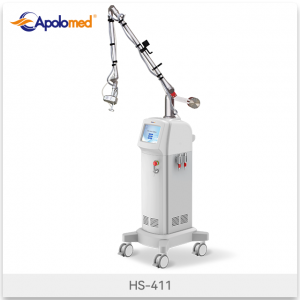
Representative Apolomed product image
Why a Procurement Framework Matters
A device can have an attractive specification sheet and still be a poor fit for a clinic. A wavelength may not match the intended use. A certificate may apply to a different model or market. A low purchase price may hide training, maintenance, replacement-handpiece, or downtime costs. A structured review helps buyers compare like with like before requesting a final quotation.
This guide is written for clinic owners, medical aesthetic professionals, distributors, and procurement teams. It focuses on equipment evaluation and supplier due diligence. It is not a treatment protocol or medical advice, and device indications must always be confirmed in the applicable market documentation.
1. Define Your Clinic’s Treatment Portfolio First
Start with the services your clinic is authorized and prepared to offer. List the intended applications, patient or client profiles, treatment areas, expected appointment volume, operator qualifications, and target countries. The purpose is to define the equipment requirement before reviewing brands or models.
A clinic that mainly needs a hair-removal platform may prioritize a different configuration from a practice evaluating pigment-related procedures, skin resurfacing, vascular applications, or a multi-application platform. The right first question is not “Which machine is the most powerful?” but “Which documented device configuration fits our intended use and operating environment?”
- Which applications are central to the clinic’s business plan?
- Which procedures require a dedicated platform, and which can be served by a multi-application system?
- Who will operate the equipment, and what training or supervision is required locally?
- Which markets will the clinic serve, and what regulatory documents are required in each market?
- What installation space, electrical supply, ventilation, cooling, and infection-control arrangements are available?
2. Match the Technology to the Intended Use
Different light and laser technologies are not interchangeable. Compare the energy source, wavelength or spectrum, pulse duration, spot size, delivery method, cooling design, and documented intended use. A neutral comparison should explain what each technology is designed to do and what the buyer still needs to verify.
Apolomed’s public portfolio illustrates several technology families, including IPL/SHR, diode laser, Q-switched Nd:YAG, picosecond Nd:YAG, CO2, and fiber laser systems. These categories should be evaluated by model and configuration rather than by a broad product label alone.
| Technology family | What to compare | Procurement question |
|---|---|---|
| IPL / SHR | Spectrum, filters, fluence range, pulse control, spot size, cooling, handpiece configuration | Does the configuration match the clinic’s documented applications and skin-type management protocol? |
| Diode laser | Wavelength, pulse width, spot size, energy delivery, cooling, handpiece life and replacement terms | Is the wavelength and configuration suitable for the intended professional use in the target market? |
| Q-switched Nd:YAG | 1064/532nm availability, pulse width, beam profile, spot size, energy calibration and aiming beam | Can the supplier document the exact model, intended use, and calibration or service process? |
| Picosecond Nd:YAG | Pulse duration, wavelength options, energy range, repetition rate, handpieces and indications | Are the performance claims supported by the model’s technical file and market-specific documents? |
| CO2 / Er:YAG / fiber laser | Wavelength, fractional pattern, scan area, pulse control, power range, delivery and safety controls | Which applications are documented, and what training, consumables, and maintenance are required? |
3. Review Parameter Transparency and Control
A credible supplier should be able to explain which parameters are adjustable, how they are measured, and which accessories or handpieces change the operating range. Buyers should request a model-specific specification sheet rather than relying on a category-level brochure.
For example, the public HS-290B product page lists 1064/532nm operation, a Q-switched pulse width of no more than 6ns, a flat-top beam profile, 2–10mm spot sizes, and an adjustable aiming beam. The public HS-411 page lists a 10600nm CO2 system with selectable 35W, 55W, and 100W configurations, up to 300mJ per microbeam, a maximum 20 × 20mm scan area, and adjustable density from 25 to 3025 microbeams/cm². These are examples of the type of information buyers should request for the exact configuration being quoted; they are not a substitute for the device’s official technical and regulatory documentation.
Ask whether output is factory-calibrated, field-calibrated, or both. Confirm the calibration interval, service responsibility, acceptance criteria, and whether the supplier provides test records with the shipped unit.
- Request the full operating range, not only the maximum value.
- Confirm units and measurement conditions for energy, fluence, pulse width, repetition rate, and spot size.
- Check whether optional handpieces or software modes change the documented intended use.
- Ask how output consistency is checked during factory inspection and after servicing.
4. Verify Compliance Documents for the Exact Model
Certification language must be precise. A manufacturer may have certifications covering several device families, but the document must still be matched to the exact model, configuration, legal manufacturer, intended use, and destination market.
In the United States, FDA explains that a 510(k) is a premarket submission used to demonstrate substantial equivalence to a legally marketed device. FDA also distinguishes clearance, approval, authorization, and establishment registration. “FDA registered” or “FDA certified” should not be treated as proof that a particular device has been cleared or approved.
For every market, request the relevant document set before placing an order. Do not rely on a certificate image without an identifying number or scope.
| Document check | What to request | Why it matters |
|---|---|---|
| United States | Exact 510(k) number where applicable, clearance decision, device name, applicant, product code, intended use and labeling | A general FDA statement or registration record may not establish clearance for the quoted configuration. |
| European Union | Applicable conformity documentation, certificate details where required, notified-body information, model scope and current regulatory basis | MDD and MDR references must not be mixed without confirming which document and transition rules apply. |
| Quality system | ISO 13485 or MDSAP certificate, certificate holder, scope, sites and validity | A quality-system certificate supports manufacturing controls; it is not automatically a product authorization. |
| Other markets | TGA, ANVISA or local registration documents when applicable, with model and intended-use scope | Market access and permitted claims vary by jurisdiction. |
Apolomed’s public Certificate page lists TUV CE0197, ISO13485, MDSAP, D-U-N-S registration and US FDA 510K-related product categories. Buyers should ask Apolomed to provide the exact certificate number, covered model, scope, validity, and official verification path for the device under consideration. This step protects both the buyer and the manufacturer from inaccurate certification claims.
5. Evaluate Workflow, Training, and Operator Support
A device becomes useful only when trained professionals can operate it consistently within the clinic’s workflow. Compare interface design, parameter presets, user permissions, aiming systems, cooling controls, emergency functions, cleaning requirements, and training materials.
Ask the supplier to describe the complete onboarding process: installation, commissioning, operator training, supervised first use where available, maintenance training, troubleshooting, and escalation contacts. For distributors, confirm whether training can be delivered in the local language and whether a service partner is available in the destination region.
Do not treat a touch screen, automatic preset, or cooling feature as evidence of clinical outcomes by itself. These are workflow and risk-management considerations that must be evaluated alongside professional training and the device documentation.
6. Calculate Total Cost of Ownership, Not Just the Quoted Price
The purchase quotation is only one part of the investment. Build a three- to five-year ownership model using confirmed assumptions. If the supplier cannot provide a number, record it as an unknown instead of filling the gap with a generic estimate.
A practical TCO model should include the equipment price, shipping and import costs, installation, training, warranty, preventive maintenance, replacement handpieces or lamps, consumables, software or accessories, local service, downtime, and any required facility changes.
For a clinic, a simple utilization model can compare expected appointment capacity with the device’s documented operating workflow. The calculation should state assumptions such as working days, appointments per day, utilization rate, consumable cost, and service intervals. It should be used for internal planning, not presented as a guaranteed return on investment.
| Cost category | Questions for the supplier |
|---|---|
| Acquisition | What is included in the quoted configuration, and which accessories are optional? |
| Installation and training | Are installation, commissioning, operator training and training materials included? |
| Maintenance | What are the preventive-maintenance intervals, service charges and calibration requirements? |
| Consumables and parts | Which components have a service life, and what are the replacement lead times? |
| Downtime and support | What response time, remote support, local service and escalation process are available? |
7. Assess the Manufacturer’s Evidence and After-Sales Capability
A supplier should be evaluated on more than product images and a list of features. Look for evidence of engineering, quality control, production, shipment, training, service, and long-term customer support. Factory photographs are useful, but process explanations and dated, model-specific evidence are more valuable.
Apolomed identifies itself as a medical and aesthetic device manufacturer founded in 2001 and presents an R&D, manufacturing, quality-control and global distribution background on its public About Us page. Its procurement conversations should build on that foundation by making the evidence more specific: which site manufactures the model, which tests are performed, which documents are supplied, and how service is handled after delivery.
For a distributor or OEM/ODM buyer, also evaluate documentation control, private-label responsibilities, software or enclosure customization, spare-parts availability, change notification, complaint handling, and who owns the regulatory obligations in the target market.
- Request a model-specific technical file index or document checklist.
- Ask for factory acceptance, final inspection, and calibration records where applicable.
- Confirm warranty exclusions, response times, spare-parts support, and escalation contacts.
- Request written clarification of OEM/ODM responsibilities, labeling, software changes, and regulatory ownership.
- Use authorized customer or distributor references where the buyer’s due-diligence process permits.
A Practical Shortlist for Apolomed Buyers
A buyer can use the following sequence when reviewing an Apolomed proposal or comparing it with another supplier. First, select the intended application and target market. Second, shortlist the relevant technology family. Third, compare the exact model’s parameters and accessories. Fourth, verify the document scope. Fifth, calculate ownership cost and service requirements. Finally, record the commercial and technical questions that remain open before requesting a final offer.
For example, buyers researching Q-switched systems can review the public HS-290B page for the listed 1064/532nm configuration, flat-top beam profile, pulse-width and spot-size fields. Buyers researching fractional CO2 systems can review the HS-411 page for its 10600nm wavelength, scan area, density range, microbeam energy and hand-draw function. The procurement decision should still be based on the current quotation, official documents, and market-specific intended use.
Clinic Procurement Checklist
- Define the clinic’s intended applications, target market, operators, facility conditions and expected workload.
- Compare technology families using wavelength, pulse duration, delivery, cooling, spot size and documented use.
- Request a complete model-specific specification sheet and identify optional components.
- Verify the exact regulatory and quality documents, including model scope and validity.
- Review installation, training, maintenance, calibration, warranty and service response terms.
- Calculate total cost of ownership using documented assumptions and mark unknowns separately.
- Record all open questions and obtain written answers before approving the purchase.
Frequently Asked Questions
Is the most powerful laser system automatically the best choice for a clinic?
No. Output is only one part of the decision. The better fit depends on intended use, documented parameters, operator training, safety controls, facility requirements, compliance documents, service support and total cost of ownership.
What should a clinic request before buying a laser system?
Request the exact model and configuration, complete specifications, intended-use information, applicable regulatory documents, quality-system certificates, warranty terms, training plan, maintenance requirements, spare-parts policy and service contacts.
Does “FDA registered” mean that a device is FDA cleared?
No. FDA states that establishment registration is different from device clearance or approval. A buyer should verify the exact device and relevant premarket record in the appropriate FDA database.
Can one platform replace every specialized laser system?
Not necessarily. A multi-application platform may simplify procurement and workflow, but each function still needs to be assessed against its documented parameters, accessories, intended use, training requirements and market authorization.
How should a clinic compare suppliers that quote different prices?
Normalize the quotations first. Compare the same configuration, handpieces, installation, training, warranty, shipping, maintenance, consumables, service coverage and documentation. A lower initial price may not be a lower ownership cost.
What is the next step after creating a shortlist?
Send each supplier the same technical and commercial checklist, request model-specific documents, record open issues, and ask for a written quotation that clearly separates included and optional items.
Conclusion
The strongest medical aesthetic laser purchase is the one that fits the clinic’s documented purpose and can be supported over its full operating life. Use wavelength and parameter data to narrow the shortlist, use regulatory and quality documents to verify the model, and use training, service and TCO information to test the business case. For product specifications or an OEM/ODM discussion, contact Apolomed through the official website.
Sources and Further Reading
- Apolomed official website
- Apolomed About Us
- Apolomed Certificate page
- Apolomed CO2 Laser HS-411 product page
- Apolomed EO Q-Switch ND YAG Laser HS-290B product page
- U.S. FDA: Device Approvals and Clearances
- U.S. FDA: FDA Registration Is Not FDA Clearance or Approval
- FDA 510(k) Premarket Notification database
Need a Model-Specific Procurement Review?
Share your target market, intended applications, preferred configuration, and documentation requirements with the Apolomed team.
Post time: Sep-15-2026


