How to Evaluate a Q-Switched Nd:YAG Laser for Your Clinic: A Practical Buyer’s Guide
Choosing a Q-switched Nd:YAG laser should be a documented procurement decision, not a comparison of headline power or a single wavelength. Clinics need to assess the intended use, pulse control, beam delivery, operator workflow, market documentation, training, and long-term support.
This guide provides a practical framework for reviewing an HS-290B proposal or comparing similar platforms from different suppliers.
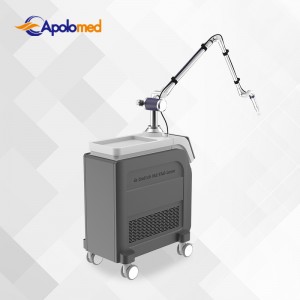
Apolomed HS-290B product image
Why Q-Switched Nd:YAG Evaluation Requires More Than a Wavelength Check
A Q-switched Nd:YAG laser can look similar to another system on a basic product list, yet the purchase decision depends on more than the presence of 1064nm or 532nm output. Clinics should compare pulse control, beam profile, spot-size options, aiming guidance, user controls, documentation, serviceability, and the exact applications permitted in the target market.
This guide is written for clinic owners, medical aesthetic professionals, distributors, and procurement teams. It uses the public HS-290B product page as a practical example of the information a buyer should review. It does not replace the product’s technical file, labeling, local registration requirements, or professional clinical judgment.
1. Start with the Intended Application and Target Market
Before comparing brands, define what the clinic needs the system to support. The same platform may be evaluated differently by a dermatology practice, a tattoo-focused studio, a general medical aesthetic clinic, or a distributor building a multi-country portfolio.
The public HS-290B page lists applications including tattoo removal, skin rejuvenation, vascular lesion removal, epidermal and dermal pigmented lesions, and skin resurfacing. These are manufacturer-stated application categories. Buyers still need to confirm which indications, claims, operator qualifications, and treatment settings are permitted in the destination market.
- List the primary service line and the secondary applications that genuinely support the business plan.
- Identify the target countries before requesting compliance documents or marketing copy.
- Confirm who will operate the system and what local training, supervision, or licensing requirements apply.
- Separate a manufacturer’s listed application from a market-approved indication or a clinical outcome claim.
- Define whether the clinic needs one dedicated system or a platform with multiple compatible handpieces and modes.
2. Compare 1064nm and 532nm as a System Configuration
A useful buyer review should ask how the available wavelengths are configured, not simply whether both numbers appear in a brochure. Request the exact wavelength options, pulse-width range, energy range, repetition rate, spot-size range, beam delivery method, aiming system, and any restrictions that apply when switching between configurations.
The public HS-290B page identifies 1064/532nm operation and describes a Q-switched pulse width of no more than 6ns. These values are useful starting points for a technical comparison, but the quoted configuration and current specification sheet should control the final purchasing decision.
| Evaluation area | Questions for the supplier | Why it matters |
|---|---|---|
| Wavelengths | Are 1064nm and 532nm included in the quoted configuration? Are they delivered through the same handpiece or different accessories? | The available wavelength configuration affects which documented applications can be considered. |
| Pulse control | What pulse-width range is available, and under what operating conditions is it measured? | Pulse duration is a core parameter for comparing laser platforms and documenting operating limits. |
| Spot size | What spot sizes are included, adjustable, or optional? How are they selected? | Spot-size options affect workflow, coverage, and the need to match the system to different treatment areas. |
| Beam profile | Is the beam profile documented, and how is output uniformity checked? | A clear beam specification helps the buyer ask about calibration and consistency rather than relying on general marketing language. |
| Aiming system | Is the aiming beam adjustable? Is it available in every operating mode? | A visible aiming system can support positioning and operator workflow, subject to professional training and protocol. |
3. Review Beam Profile, Spot Size, and Operator Control
The HS-290B public page describes a flat-top beam profile and an adjustable aiming beam. For procurement purposes, those statements should lead to specific follow-up questions: What test method supports the beam-profile description? How is output checked at different spot sizes? Is the aiming beam brightness adjustable? Can the operator see the target area clearly in the actual treatment environment?
The page also describes professional mode and treatment mode. Buyers should request a clear explanation of what each mode changes, which parameters are available to the operator, and whether access controls, user profiles, or treatment records are supported. A mode name alone does not establish clinical performance; the buyer needs the operating manual and a demonstration using the quoted configuration.
- Request the beam-profile definition and any factory inspection or calibration record supplied with the system.
- Confirm the available spot-size range and whether each size is standard or optional.
- Ask whether the display shows the selected wavelength, pulse settings, energy, frequency, and spot size clearly.
- Check whether user permissions or operating modes can be configured for different staff roles.
- Document which controls are software-based and which require a physical handpiece or accessory.
4. Verify the Exact Compliance and Quality Documents
A certificate image should never be treated as the complete compliance review. The document must be matched to the exact model, legal manufacturer, configuration, intended use, destination market, and validity period. A quality-system certificate can support manufacturing controls, but it does not automatically prove that a particular device is authorized for every application or market.
In the United States, FDA distinguishes device registration and listing from device clearance, approval, or authorization. FDA explains that a 510(k) is used to demonstrate substantial equivalence to a legally marketed device. Buyers should therefore ask for the exact regulatory pathway and model-specific evidence rather than using broad phrases such as “FDA registered” as a substitute for clearance or approval.
| Document area | Minimum review items | Buyer action |
|---|---|---|
| Product identity | Model name, model number, configuration, manufacturer, and labeling | Confirm that every document uses the same identity as the quotation. |
| Market access | Applicable registration, clearance, conformity, or local authorization | Check the official market database or competent-authority source where available. |
| Quality system | Certificate holder, covered site, scope, and validity | Treat ISO or similar evidence as a quality-system signal, not as automatic product authorization. |
| Intended use | Permitted applications, contraindications, warnings, and operator requirements | Align the proposed marketing claims and training materials with the approved or documented scope. |
| Service records | Calibration, maintenance, acceptance testing, and complaint process | Include document delivery and after-sales responsibilities in the purchase terms. |
5. Evaluate Training, Safety, and Service as Part of the Device
A laser purchase is not complete when the carton arrives. The clinic needs an installation plan, operator training, safety procedures, maintenance instructions, escalation contacts, and a clear process for handling service events. These items are especially important for systems that may be used across multiple applications or by more than one operator.
Ask the supplier to separate product training from clinical decision-making. Product training should explain controls, accessories, cleaning, maintenance, fault messages, and safe operating procedures. Clinical protocols and patient assessment must remain within the responsibility of appropriately qualified professionals and the applicable local rules.
- What is included in installation and commissioning?
- Is live or remote training provided, and is training completion documented?
- Which parts are consumables, wear items, or long-lead replacement components?
- What is the response process for a fault, calibration issue, or service interruption?
- Are manuals, safety labels, software updates, and service records supplied in the required language?
6. Calculate Total Cost of Ownership Before Comparing Quotes
The lowest equipment price is not always the lowest operating cost. A clinic should calculate the expected ownership cost over a defined period, including the device, shipping, installation, training, accessories, consumables, preventive maintenance, replacement parts, software or service fees, downtime, and local compliance work.
For an HS-290B proposal or any comparable Q-switched system, request a line-item quotation. Ask which handpieces and spot sizes are included, whether the warranty covers the laser source and control system, what travel or remote-service charges may apply, and how quickly commonly needed parts can be supplied. The objective is not to predict a fixed return; it is to make the assumptions visible before purchase.
| Cost category | Questions to include in the quote |
|---|---|
| Initial configuration | Which wavelengths, handpieces, spot sizes, accessories, and software functions are included? |
| Installation and training | Are delivery, commissioning, operator training, travel, and translated manuals included? |
| Maintenance | What service interval, calibration process, and preventive-maintenance cost should be expected? |
| Replacement parts | Which parts have a defined service life, and what are the lead time and warranty terms? |
| Downtime risk | What remote diagnosis, loaner, repair, or escalation support is available? |
7. Use a Shortlist Scorecard Instead of a Brochure Comparison
A scorecard makes supplier comparisons more consistent. Weight the criteria according to the clinic’s priorities, record the evidence supplied by each vendor, and mark unanswered questions before selecting a preferred configuration. A score should not replace professional and regulatory review, but it can prevent a purchase from being decided by one headline specification.
A practical scorecard can include intended-use fit, model-specific documentation, wavelength and parameter transparency, operator controls, safety and training, service response, replacement-part availability, total cost of ownership, and supplier communication. Ask the same questions of every shortlisted supplier so that the final comparison is based on comparable evidence.
- Application fit: Does the documented configuration match the clinic’s real service plan?
- Technical transparency: Are the key parameters, units, limits, and test conditions clear?
- Documentation: Can the supplier provide model-specific and market-specific evidence?
- Operational readiness: Can the clinic install, train, operate, maintain, and service the system?
- Commercial clarity: Are included items, exclusions, warranty terms, and service costs visible?
A Practical HS-290B Review Sequence
Buyers researching the Apolomed HS-290B can begin with the public product page, then request the current model-specific specification sheet, user manual, applicable compliance documents, quotation, warranty terms, and training plan. Review the listed 1064/532nm configuration, Q-switched pulse-width information, flat-top beam profile, spot-size fields, aiming-beam controls, and operating modes as a starting point for supplier questions.
The final decision should be based on the current quoted configuration and the destination market’s requirements. Public website content is useful for building a shortlist, but it should not be used as a substitute for the documents and professional review required before purchase or clinical operation.
Frequently Asked Questions
Is a Q-switched Nd:YAG laser suitable for every tattoo or pigmented-lesion case?
No. Suitability depends on the diagnosis, pigment or ink characteristics, patient factors, operator assessment, local requirements, and the device’s documented intended use. A supplier page should not be treated as an individual treatment recommendation.
What should I request for an HS-290B quotation?
Request the exact configuration, wavelengths, handpieces, spot sizes, pulse and energy ranges, user manual, applicable compliance documents, warranty terms, installation and training scope, maintenance process, and replacement-part terms.
Does “FDA registered” mean that a device is FDA cleared?
No. Registration and listing are different from clearance, approval, or authorization. Buyers should verify the applicable regulatory pathway and exact model through the relevant official documentation.
Why does beam profile matter in procurement?
Beam profile is one technical factor that can help buyers ask how energy distribution and output consistency are characterized. It should be reviewed alongside calibration evidence, spot-size behavior, operating limits, and professional training.
Should the lowest quotation determine the purchase?
Not by itself. Compare the full configuration, documentation, installation, training, warranty, maintenance, replacement parts, downtime support, and total cost of ownership before selecting a supplier.
Sources and Further Reading
- Apolomed HS-290B product page
- Apolomed official website
- Apolomed Certificate page
- Apolomed About Us
- U.S. FDA: Device Approvals and Clearances
- U.S. FDA: Registration Is Not Clearance or Approval
Need a Model-Specific Q-Switched Laser Review?
Share your target market, intended applications, preferred configuration, and documentation requirements with the Apolomed team.
Post time: Sep-20-2026


